To create a framework that helps us operate with focus and optimize capital allocation, Presto Research identifies the following trends as the key growth drivers of the blockchain industry over the next five years. These theses will evolve as the world changes and this nascent technology finds pockets of product-market fit.
1. Stablecoin: Expansion of Dollarized Internet
The US dollar and blockchain are a match made in heaven. Blockchain’s value proposition as a “frictionless value exchange rail” has perfect product-market-fit with the US dollar, for two reasons. First, the USD is one of the few globally coveted assets. Value is often subjective, shaped by narratives and community context, but a handful of things—like staples, oil, gold, microchips, and the USD—enjoy near-universal appeal. Second, as a global asset that frequently crosses borders, tokenizing the USD on a “value superhighway” (a nod to the internet’s “information superhighway” of the ‘90s) delivers massive benefits, because it is at jurisdictional borders where the biggest frictions exist. It’s the kind of 10x improvement startups rave about, compelling users to ditch legacy systems for something better.
The US Congress gave this trend a major boost with the GENIUS Act this year, sparking a surge in corporate activity to integrate stablecoins. This sets the stage for multi-year growth in the sector. With this backdrop, we’re hunting for the best risk-return tradeoffs in the stablecoin space, guided by the following premises.
Primarily a USD Story
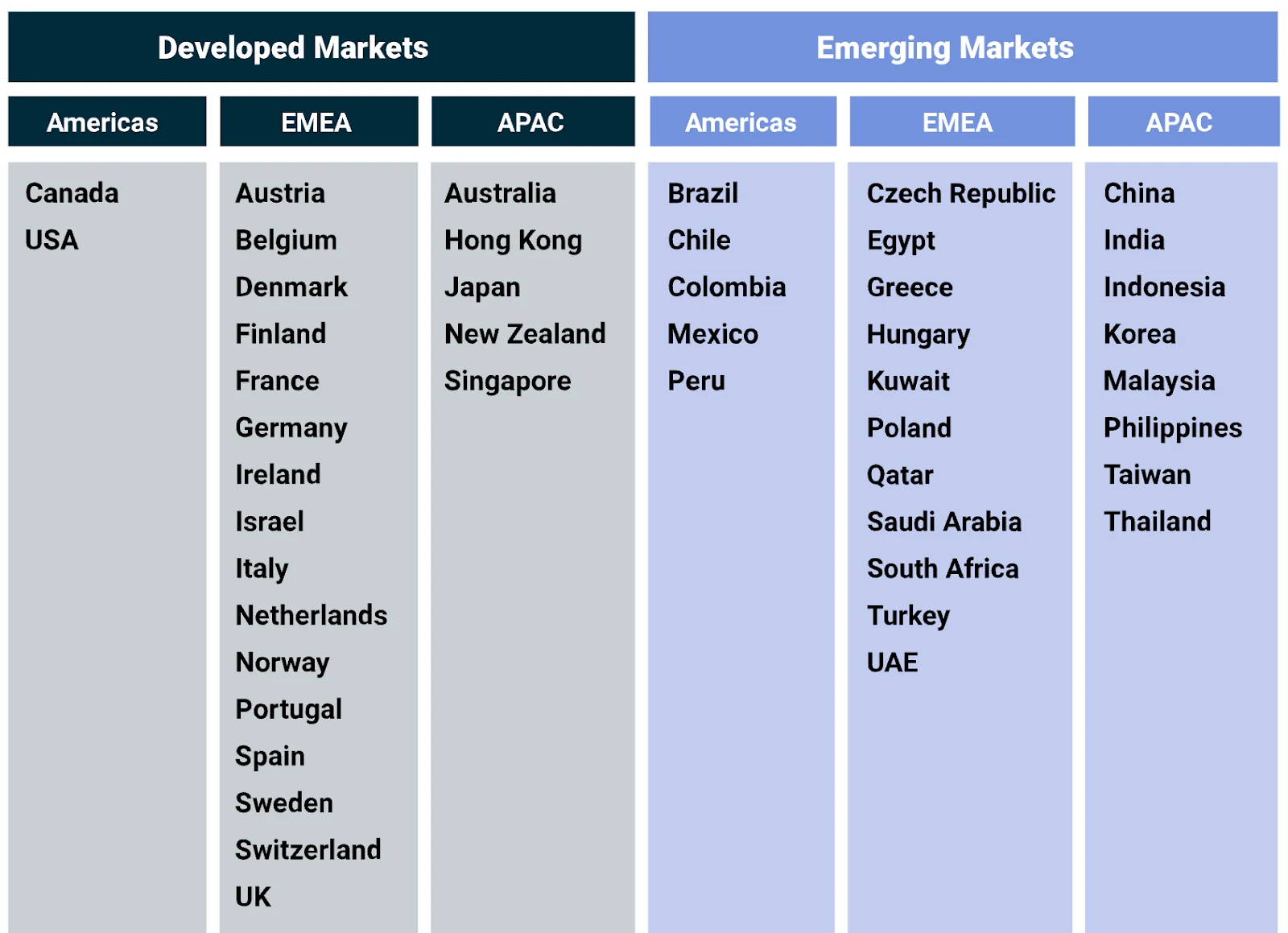
The stablecoin story is, at its core, a USD story. Tokenizing non-USD currencies, whose value is often confined within their home borders, might bring some benefits but not the 10x leap needed for mass adoption. These currencies don’t cross borders often enough to justify the switch. It’s even less compelling to tokenize restricted currencies under capital controls (e.g., CNY, INR, KRW). The only way tokenizing these currencies becomes an attractive investment thesis is if their issuing governments plan to lift capital controls and internationalize them (Figure 1). Easier said than done, but at least the risk-return profile improves if a well-positioned nation does it under capable leadership.
Figure 1: Jurisdictions with Capital Control (EMs) According to MSCI
Source: MSCI
White-label Solutions
Businesses with extensive customer networks (e.g. Amazon, Schwabs, Visa, JP Morgan, etc.) are highly incentivized to integrate stablecoins under the GENIUS Act. Integration can take many forms, but the appeal of white-label solutions is undeniable for intermediaries with a distribution network already and want to implement a ready-made solution. Pioneered by Paxos, white-label solutions have a proven track record, especially when paired with strong distributors (e.g., PayPal’s PYUSD, Binance’s BUSD). The space has room for more providers. The much-heralded USDH auction by Hyperliquid signals the advent of the stablecon 2.0 era where customizable yield-sharing solutions are poised to gain market share at the expense of the incumbents.
2. Liquidity Pooling Beneficiaries
One big win from frictionless value exchange is efficient liquidity (capital) pooling. This has huge implications for financial services of all kinds. At its core, financial services are about getting capital where it’s needed. Liquidity pooling is the foundation of this. Banks pool deposits to lend money and charge interest. Investment banks rally demand for war bonds to help governments finance conflicts. Stock exchanges attract market makers to ensure smooth trading for their members. All are examples of liquidity pooling.
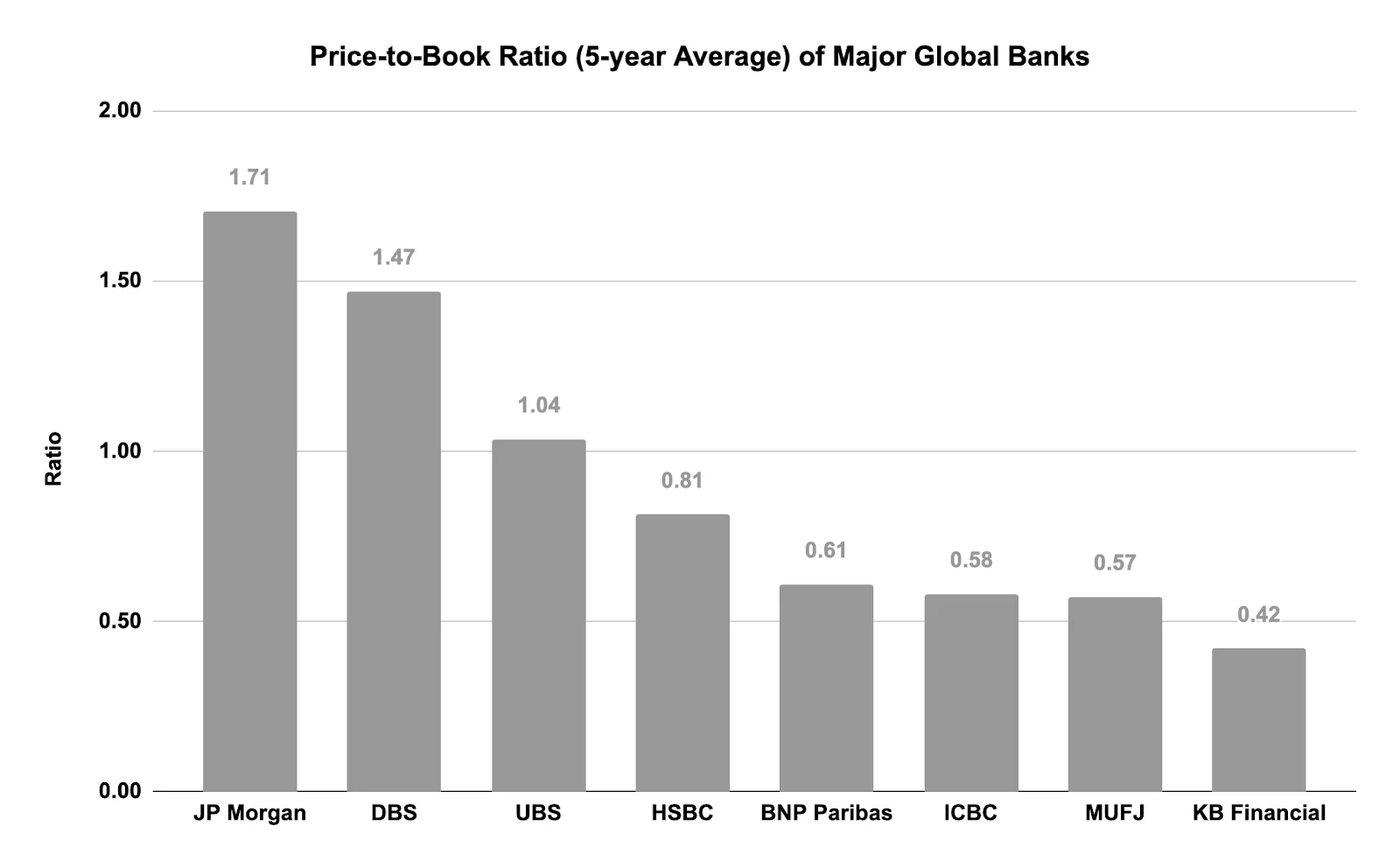
But liquidity pooling isn’t free – it comes with costs. And some players do it more cheaply than others, and that’s often what separates the competitive financial service providers from the less competitive ones. This directly impacts their profitability and ultimately their values.
Figure 2: Low-Cost Funding Helps Profitability and Valuation
Source: Bloomberg, Presto Research
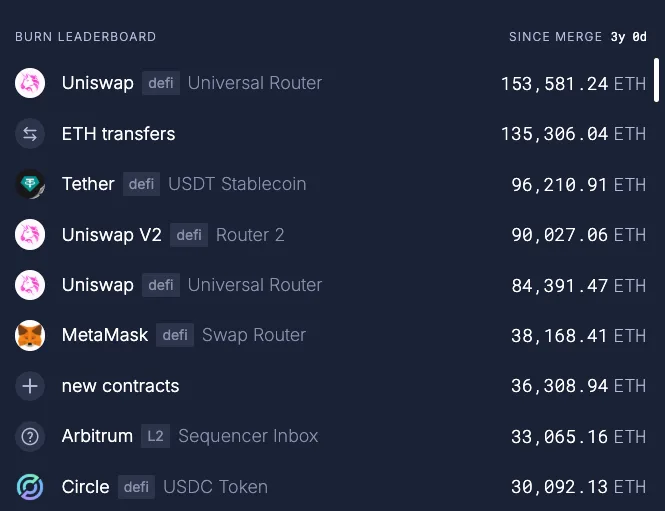
Once you see this, it’s easy to understand why financial services built on infrastructure that enables near-instant, low-cost liquidity pooling have a massive edge over those stuck on legacy systems. Blockchain is that infrastructure. This is why DeFi is likely the next blockchain killer app after stablecoins. Uniswap, alongside USDT and USDC, has consistently ranked among the top 10 applications on the Ethereum network for years, measured in gas fees burned (Figure 3). Try replicating Uniswap’s automated market maker (AMM) model on traditional financial rails – it just wouldn’t work. Uniswap thrives because it cleverly takes advantage of blockchain’s unique capabilities.
Figure 3: Most Used Apps on Ethereum (as of 9/15/25)
Source: ultrasound.money
The growing stablecoin user base will drive steady, expanding demand for yield-generating products, fueling the growth and innovation of DeFi applications. Where else can blockchain’s efficient liquidity pooling deliver a 10x improvement beyond trading and lending/borrowing?
Capital formation is a prime example. ICOs fall under this umbrella, while airdrops and reward points can also be loosely included as incentive mechanisms that directly encourage value contribution. This also aligns perfectly with one of the four key areas SEC Chair Paul Atkins highlighted in his “Project Crypto” speech, where he promised regulatory clarity to encourage these activities. He even predicted “a Cambrian explosion in innovation” could follow. We agree.
Other areas to watch under this thesis include: 1) prediction markets, where efficient liquidity pooling enables better price discovery and more reliable signals, 2) insurance or lotteries, where efficient liquidity pooling can maximize payouts and enable smart, innovative product designs. We look forward to speaking with founders in this space.
3. TradFi x Crypto
Speaking of “Project Crypto,” there’s no better place to look for a roadmap on how the crypto industry will evolve in the coming years. Bitwise CIO Matt Hougan even remarked, “You could build an entire venture capital firm around the chairman’s vision, creating companies to capitalize on each opportunity he lays out.” One opportunity that stands out is TradFi-DeFi integration, the fourth point in his speech.
The intention is clear: SEC Chair Paul Atkins wants to modernize the U.S. financial industry and sees DeFi as a key tool to get there. What matters to him is that it delivers, not the whole decentralization theater; this is clear in his use of the term ‘on-chain software system’ during his speech, referring to what’s commonly known as DeFi among the crypto natives.
Already, tons of opportunities are popping up at the intersection of crypto and TradFi. Tokenizing securities of all kinds will be a major focus for TradFi giants in the years ahead, spurring demand for supporting services. The growing stablecoin user base, initially craving reliable, recurring income from safe assets like tokenized treasuries, will eventually move up the risk curve to growth assets like tokenized equities and commodities. This creates a lasting tailwind for the “tokenize everything” trend, more commonly known as RWA in crypto.
4. Infrastructure Upgrade
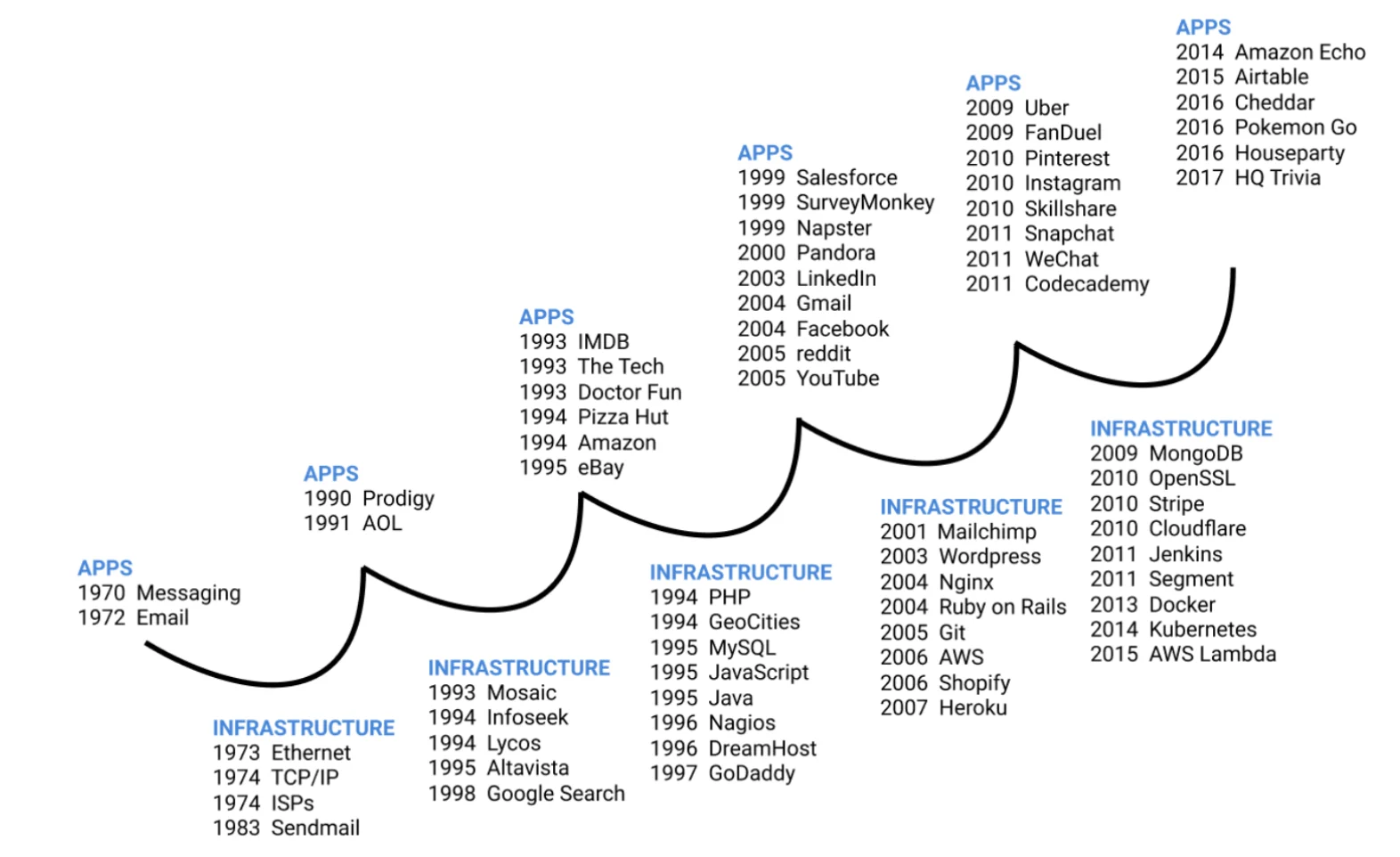
In their seminal piece The Myth of The Infrastructure Phase, Dani Grant and Nick Grossman at Union Square Venture explain that technology advances are driven by a continuous apps-infrastructure cycle. They write: “Apps and infrastructure evolve in responsive cycles, not distinct, separate phases.” For example, internet adoption followed this pattern (Figure 4).
Figure 4: How Internet Evolved
Source: Union Square Ventures
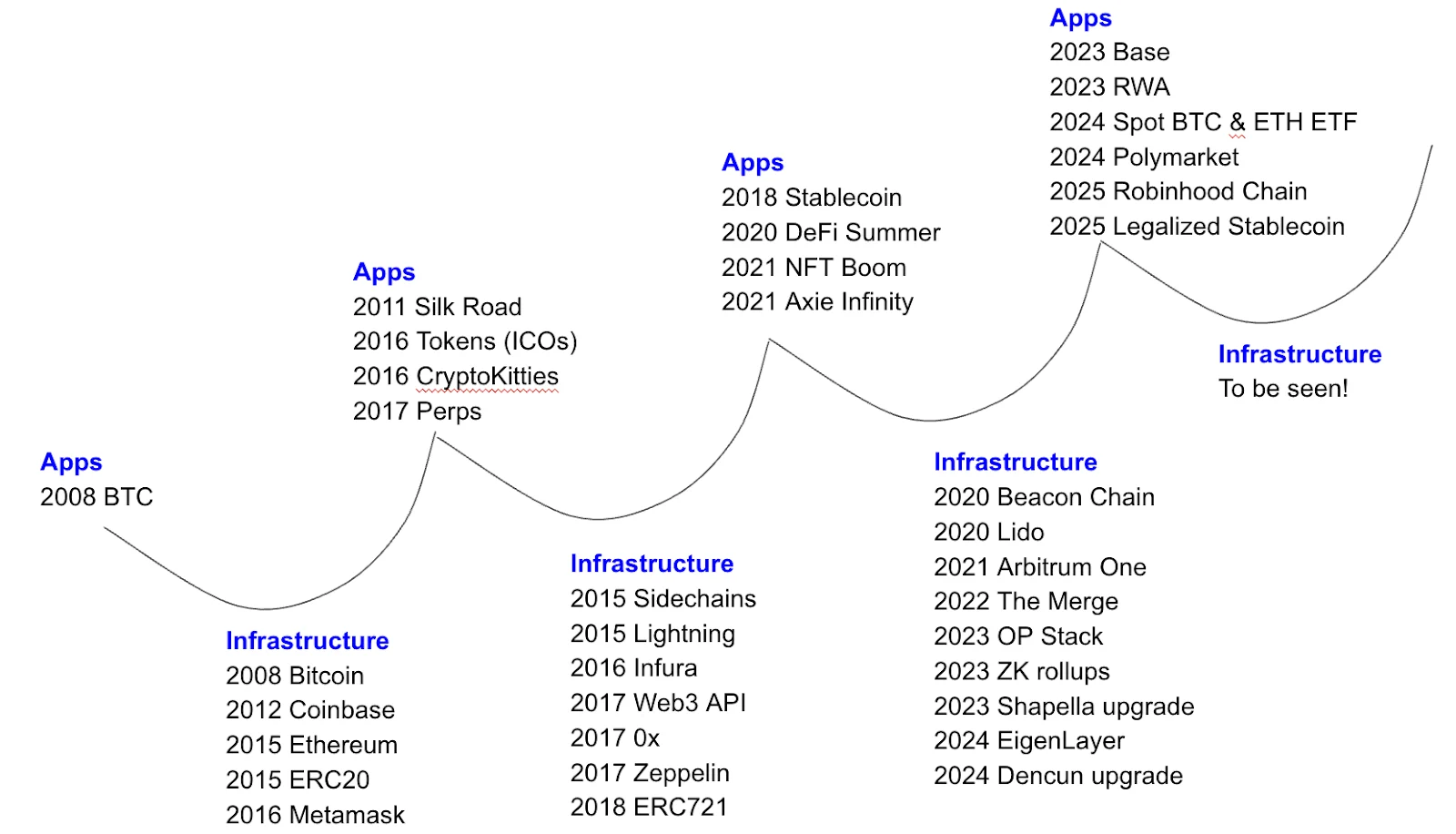
Their article applies this thesis to the crypto industry but only up to 2018, when it was written. We build on their work to update this useful framework, as shown below.
Figure 5: How Blockchain is Evolving
Source: Union Square Ventures, Presto Research
The chart highlights that we’re at a point in the cycle where several breakout crypto apps have emerged, inspiring other developers to follow suit. To do so, they need better development tools and infrastructure. As more financial institutions dive into on-chain trading, privacy protection becomes a critical prerequisite (hello, ZK adoption). Unlike blockchain-native assets like BTC or ETH, RWAs are always tied to legal and sovereign constraints. This means RWA settlement networks must be equipped to handle real-world rules (think institution-friendly permissioned chains). The rise of corporate chains will create major opportunities for interoperability solutions. Credible UX solutions, long considered a bottleneck for mass retail adoption, are another potential growth area.
5. AI x Crypto
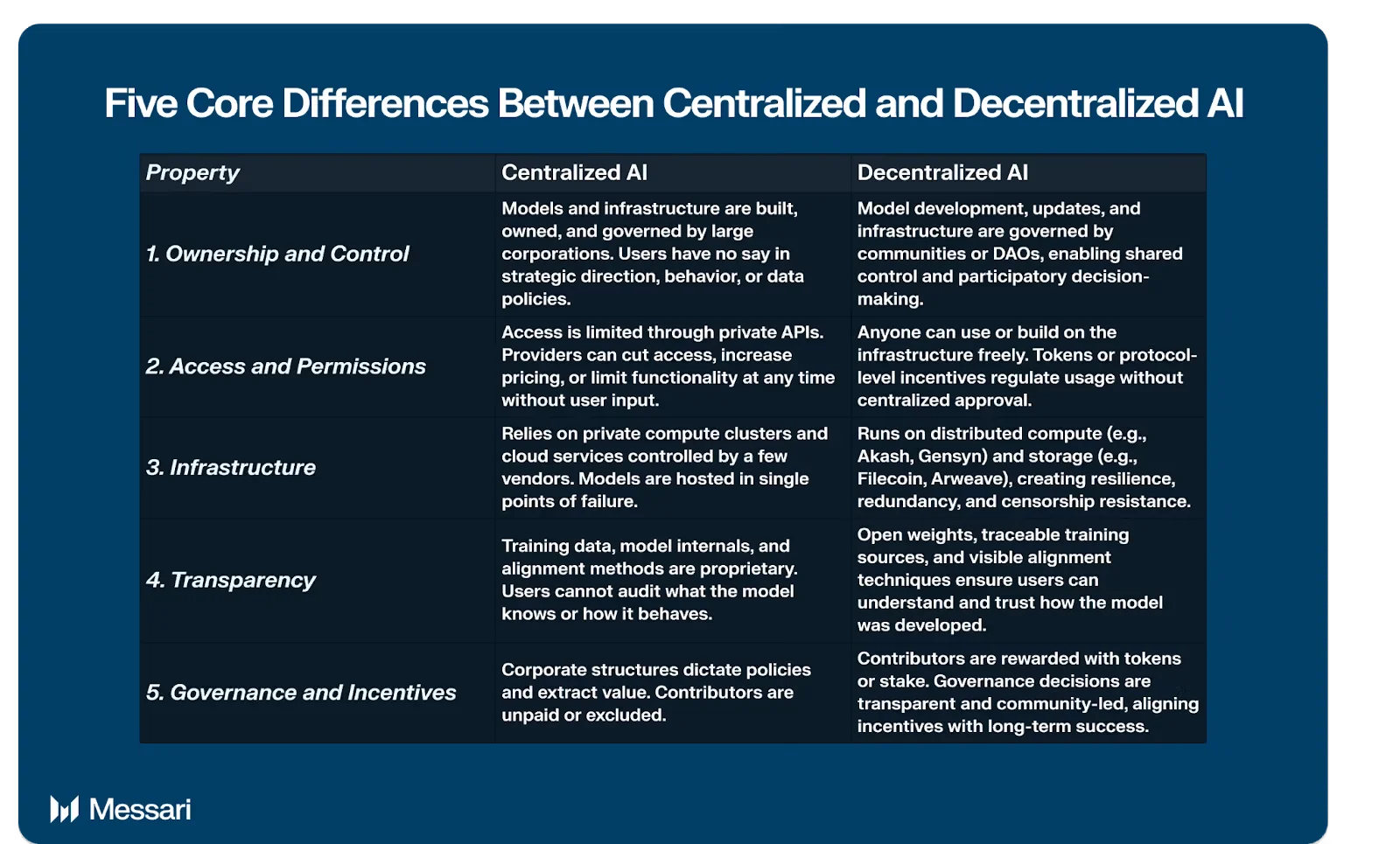
This is a huge topic and we are very early, akin to discussing Bitcoin’s potential back in 2011. Context matters. Large centralized companies like OpenAI, Google, and DeepSeek are driving AI evolution, even though from day one, many voiced concerns over all that power landing in just a few elite hands. AI x Crypto is the counter to that trend, just like Bitcoin is to centralized finance or Web 3 movement is to the Big Tech’s Web2 dominance. AI x Crypto, in essence, is decentralized AI.
To be clear, centralized and decentralized AI will co-exist, just as open-source and closed-source software do. Open source doesn’t dominate consumer apps, but it powers the internet, cloud infrastructure, and developer tools behind the scenes. Decentralized AI can do the same, offering infrastructure that supports inference microservices, on-demand fine-tuning, and specialized models for underserved domains. Centralized AI will continue scaling vertically, through bigger models, and tighter control. Decentralized AI will grow horizontally through composability, trustless coordination, and permissionless participation.
That said, while both have their place, only decentralized AI lets users own a piece of the system they’re building. That's where our opportunities lie, and we break them down into four categories.
Decentralized Compute Networks: GPU networks for training
Coordination Platforms: incentivization of model development (e.g. Bittensor) or specialized inference settings (e.g. zkML, Modulus)
AI Tools & Services: tools that AI models and agents pay to use in a shared marketplace
Applications: end-user products (e.g. chatGPT)
Building off the work done on Bittensor ecosystem (see From Bitcoin to Bittensor: The Next Monetary Primitive for more), we look forward to expanding our coverage and working closely with founders in this space.