Summary
1. Market Landscape
1.1. The Stablecoin Settlement Layer
1.2. The RWA Tokenization Frontier
2. Asia’s Regulatory Architecture
2.1 Hong Kong Builds the Infrastructure
2.2. China Opens a Controlled Door
2.3. Singapore Matures Its Framework
3. Future Trends: From Tokenized Treasuries to PayFi Convergence
3.1. RWA’s Next Phase: Gold, Green Energy, and Chinese Assets
3.2. The Offshore RMB Stablecoin Thesis
3.3. PayFi: When Payments Meet Programmable Finance
4. Conflux’s Market Positioning
4.1. The Addressable Market
4.2. Competitive Positioning
5. Why Conflux: The China-to-Global Bridge
5.1. Compliance as a Moat
5.2. Technical Infrastructure Scaled for Payments
5.3. The Multi-Currency Stablecoin Matrix
5.4. Real-World Payment Connectivity
6. Execution: What Has Been Built
6.1. Green Energy Battery-Swapping RWA in China
6.2. PayFi Ecosystem Development
6.3. RWA Pipeline and DeFi Infrastructure
7. Final Words
Summary
A multi-trillion-dollar opportunity: Tokenized real-world assets have grown from $85 million in 2020 to over $30 billion on public chains, while stablecoins now carry $320 billion in market cap and processed $33.4 trillion in on-chain volume in 2025. Tokenized assets are projected to reach $9.4 trillion by 2030, with Asia positioned as the fastest-growing region for both RWA and stablecoin adoption.
Asia’s regulatory inflection point: A convergence of regulatory developments has created a window of opportunity. Hong Kong issued its first two stablecoin licenses in April 2026, China clarified a regulated pathway for offshore RWA tokenization of domestic assets, and Singapore’s Project Guardian has progressed from experimentation toward live institutional pilots. These moves unlock trillions in previously inaccessible Asian assets for tokenized global capital markets.
Conflux’s strategic positioning: Conflux Network occupies a niche that no other major blockchain fills. It is the only compliance-friendly public blockchain in mainland China with a live PayFi stack, the first AFSA-approved offshore RMB stablecoin (AxCNH), USDT0 integration, and partnerships with Ant Digital Technologies and China Telecom. Its ambition is to become the primary blockchain settlement rail for China’s $3.3 trillion Belt and Road trade corridor and Hong Kong’s emerging tokenized asset infrastructure.
Execution progress: Key milestones include the March 2025 launch of a green energy battery-swapping RWA project in China (596 stations, 15,000+ batteries), a 500-million $CFX ecosystem fund for PayFi, the BitUnion prepaid card accepted in 183 countries via UnionPay International, the November 2025 integration of USDT0, and April 2026 support for XAUT0 extending Conflux’s settlement stack from stablecoins into tokenized gold.
1. Market Landscape
We are currently witnessing two parallel forces reshape how value moves globally. The first is the tokenization of real-world assets: the conversion of traditionally illiquid instruments like bonds, real estate, and commodities into programmable on-chain tokens that trade 24/7 with instant settlement. The second is the quiet emergence of stablecoins as the default settlement layer for cross-border commerce, displacing legacy SWIFT rails that can be costly and slow. Together, they represent a generational shift in how global financial plumbing operates.
What makes 2026 different from prior years is the regulatory dimension, particularly in Asia. Hong Kong, Singapore, and mainland China have each taken decisive steps to bring tokenized assets and stablecoins within regulated frameworks for the first time, creating a race among blockchains to capture the resulting flows.
1.1. The Stablecoin Settlement Layer
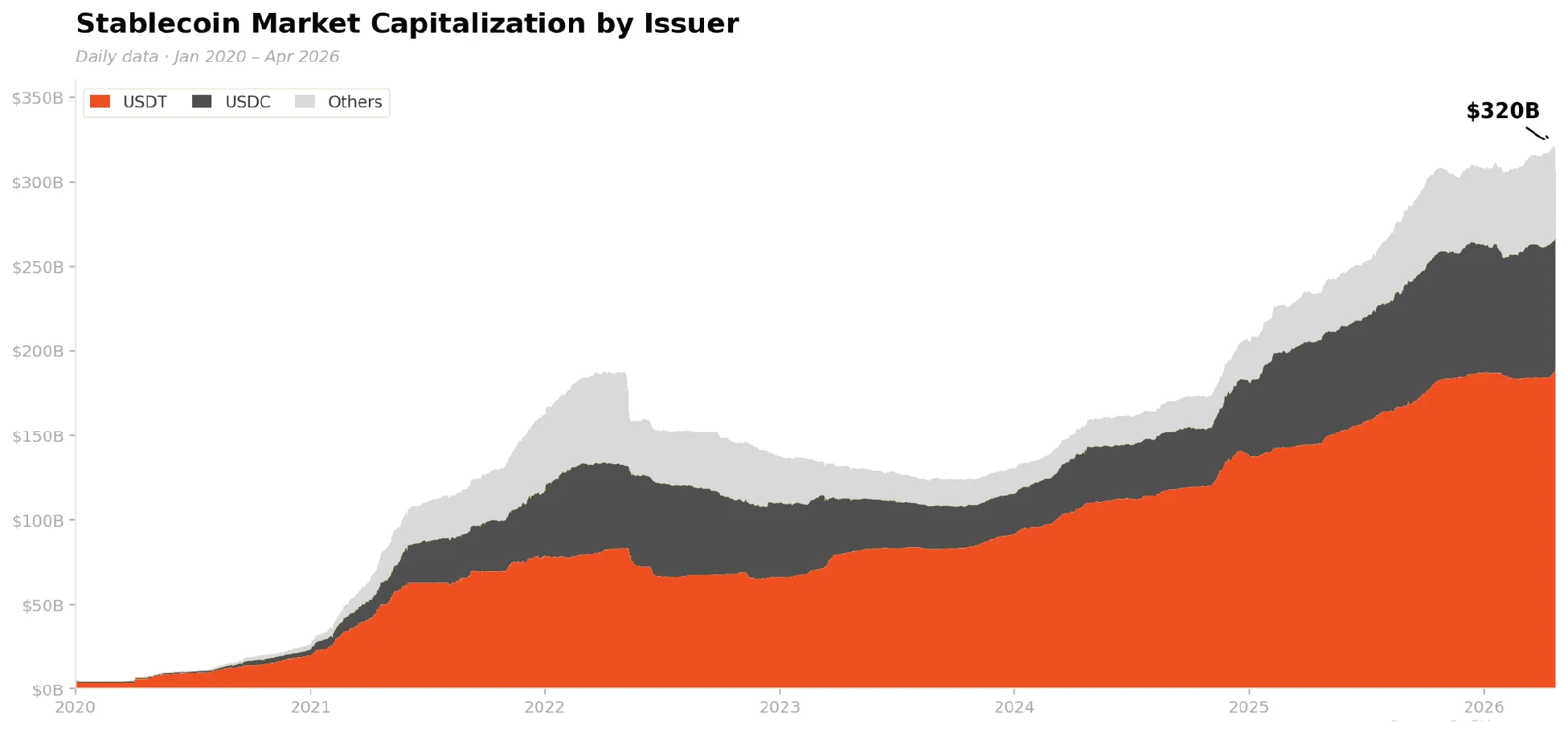
Stablecoins have evolved from a crypto-native trading instrument into global payment infrastructure. Total market capitalization grew from $135 billion at the start of 2024 to over $320 billion by April 2026. USDT dominates at 58% market share, followed by USDC at 25%, meaning that the two largest dollar stablecoins together account for over four-fifths of stablecoin supply. The remaining share is increasingly contested by institutional and DeFi entrants including Ethena’s USDe, World Liberty Financial’s USD1, PayPal’s PYUSD, and other emerging dollar-backed assets.
Figure 1: Stablecoin market capitalization has expanded sharply since 2020
Source: DefiLlama, Presto Research
Transaction volume tells an even more dramatic story. On-chain stablecoin transfers reached $33.4 trillion in 2025, with Visa-adjusted payment-specific volumes hitting $11.1 trillion (an 85% year-on-year increase). B2B stablecoin payments surged from less than $100 million per month in early 2023 to over $3 billion per month by mid-2025, a 30x expansion. Stablecoin issuers now hold $155 billion in US Treasury bills, making them the seventh-largest purchaser of US government debt. Stablecoins have clearly far outgrown their crypto-native roots, now a parallel financial system processing volumes that can rival the likes of Visa and Mastercard.
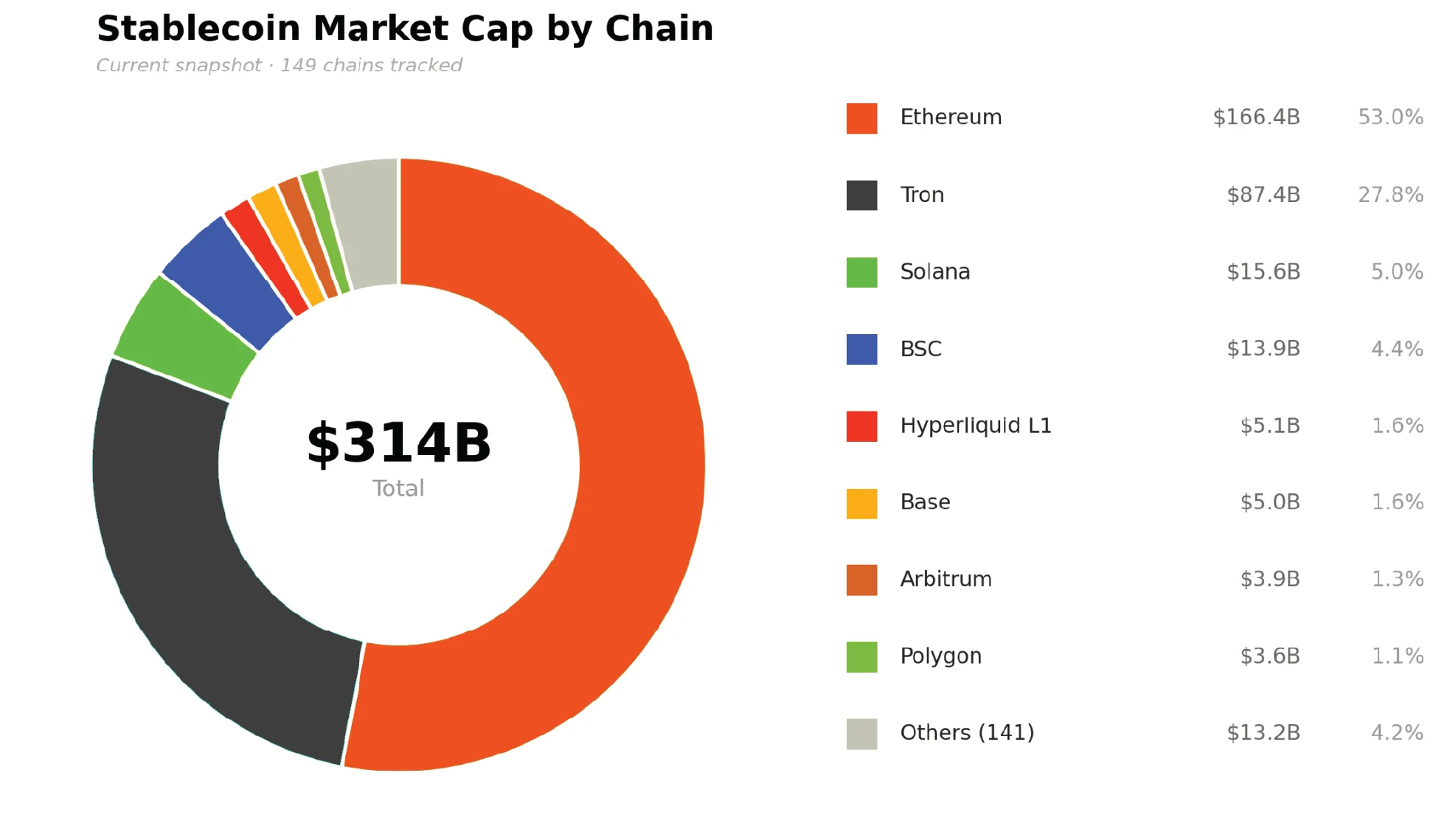
Figure 2: Ethereum and Tron dominate total stablecoin supply
Source: DefiLlama, Presto Research
The chain-level distribution of stablecoin activity reveals a dynamic and competitive mix (Figure 2). Ethereum leads with $166.4 billion in stablecoin supply and approximately $2.1 trillion in monthly transfer volume. Tron hosts $87.4 billion in stablecoins and processes north of $600 billion per month, primarily serving emerging market P2P transfers. Solana has emerged as the fastest-growing payments chain, recording a record $650 billion in adjusted monthly stablecoin volume in February 2026, overtaking both Ethereum and Tron for that month. Meanwhile Layer 2 networks like Arbitrum and Base continue to host an increasing share of activity.
1.2. The RWA Tokenization Frontier
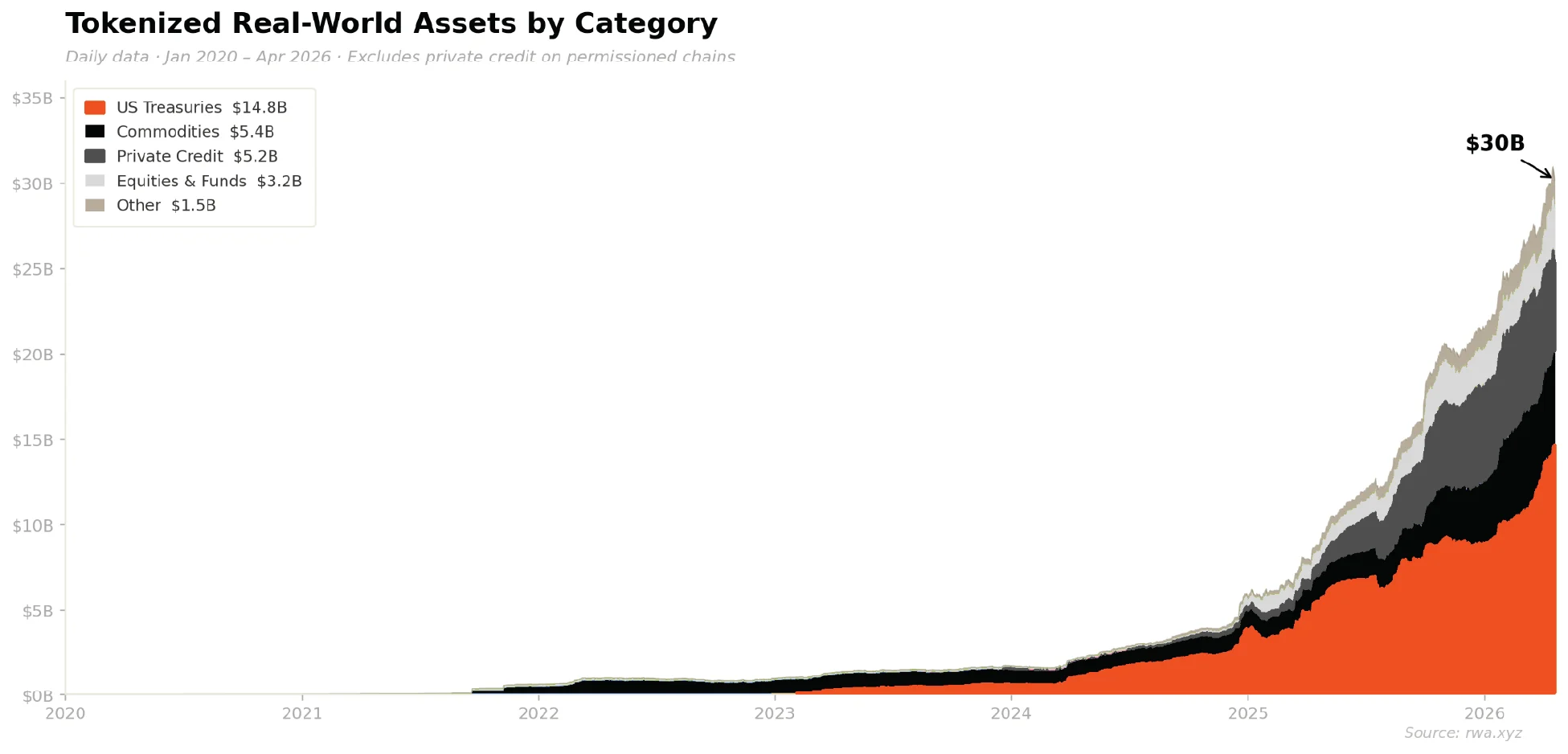
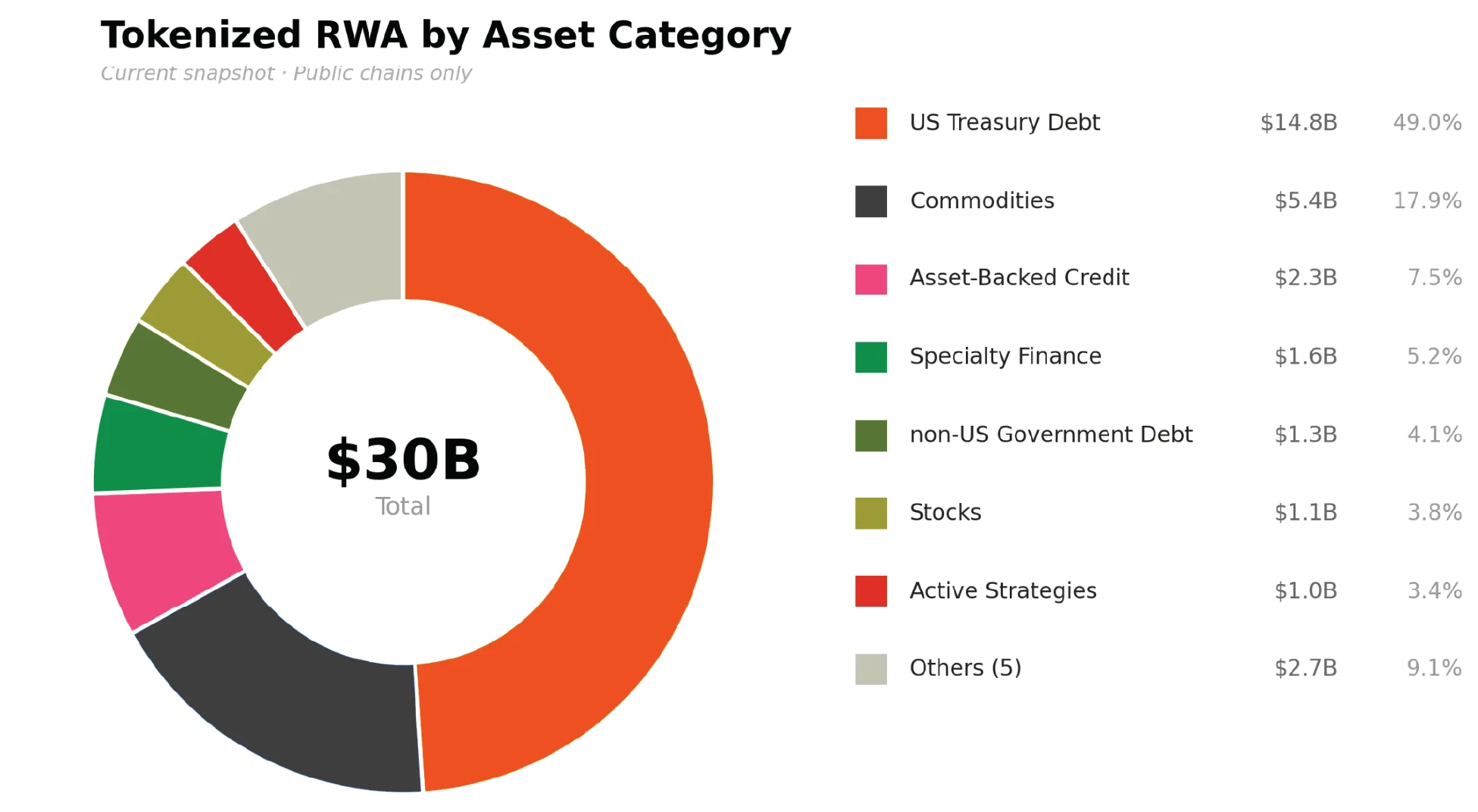
Tokenized real-world assets tell a complementary story of institutional adoption. The market has grown to an all-time high of $30 billion on public chains by April 2026, with broader estimates including permissioned chains like Provenance exceeding $36 billion. On public chains, tokenized US Treasuries lead at over $14 billion, followed by tokenized gold at over $5 billion and on-chain private credit at approximately $5 billion. Including permissioned activity, private credit is the largest overall category at $18.9 billion.
Figure 3: RWA token supply hits an all-time high of $30B on public chains
Source: RWA.xyz, Presto Research
The institutional roster participating in tokenization now includes the largest players across global finance: BlackRock’s BUIDL fund ($2.4 billion) is deployed across nine blockchains, Franklin Templeton’s BENJI exceeds $1 billion, JPMorgan launched its MONY tokenized money market fund on Ethereum in December 2025, while Goldman Sachs and BNY Mellon launched joint tokenized MMFs. In March 2026, Franklin Templeton partnered with Ondo Finance to tokenize five ETFs (equities, bonds, and gold) for 24/7 trading in crypto wallets. This marks the largest traditional asset manager to support on-chain distribution thus far.
Figure 4: US Treasuries and commodities top RWA token holdings
Source: RWA.xyz, Presto Research
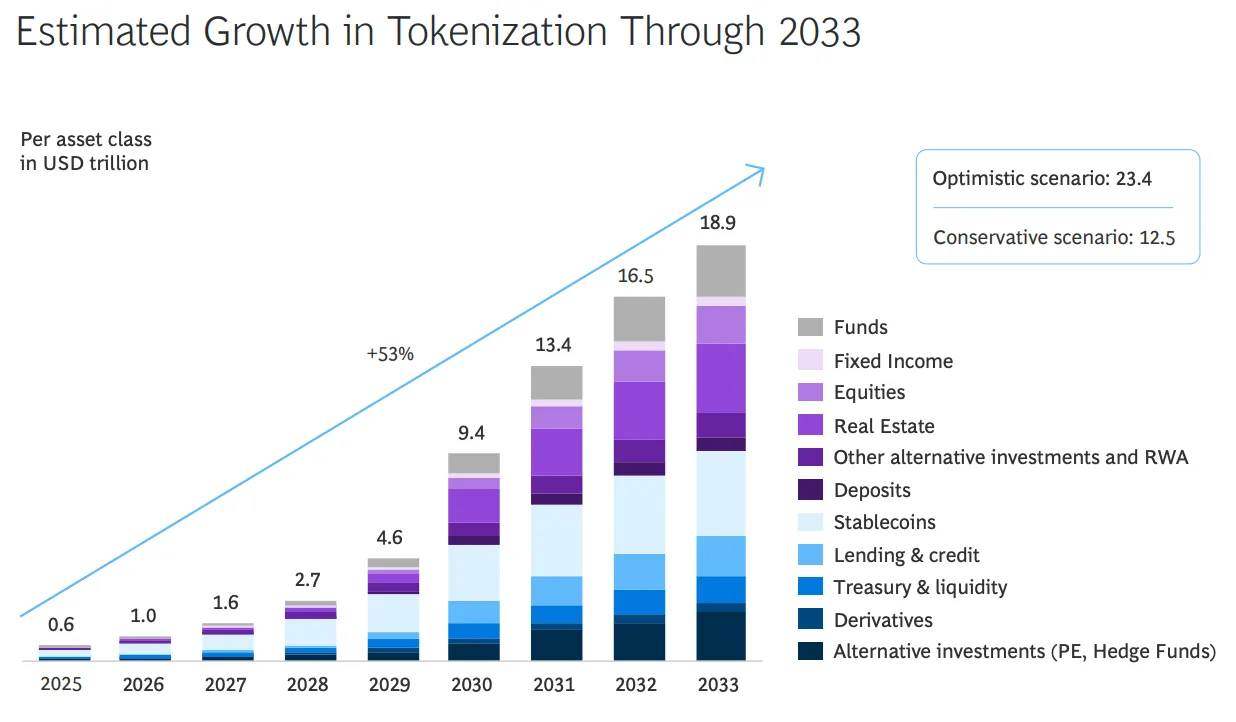
BCG and Ripple project the tokenized asset market will reach $9.4 trillion by 2030 and $18.9 trillion by 2033, implying a 53% compound annual growth rate. McKinsey’s more conservative estimate targets $2 trillion by 2030, and Standard Chartered’s bullish projection reaches $30.1 trillion by 2034. The consensus across all major forecasters is clear: this is a multi-trillion-dollar market within the decade, and the infrastructure race to capture it is well underway.
Figure 5: BCG and Ripple project trillions in tokenized RWA growth
Source: Ripple, BCG
Ethereum commands 60-70% of RWA value on public chains, reinforced by institutional familiarity and its Layer 2 ecosystem. But the multi-chain trend is accelerating: BUIDL’s expansion to nine chains, Ondo’s deployment across Solana and Aptos, and the emergence of RWA-specific L2s like Plume Network all signal that no single chain will monopolize the market. This fragmentation creates space for chains with differentiated geographic or regulatory advantages.
2. Asia’s Regulatory Architecture
Many key regulatory developments for RWA and stablecoins are happening in Asia. Hong Kong, mainland China, and Singapore have each made moves in late 2025 and early 2026 that collectively reshape the region’s digital asset landscape. For blockchains focusing on Asian markets, understanding these interlocking regulatory frameworks is essential. This will define which flows are possible, which structures are legal, and which infrastructure will be chosen.
2.1. Hong Kong Builds the Infrastructure
Hong Kong has positioned itself as Asia’s regulated digital asset hub through a series of interlocking initiatives. The Stablecoins Ordinance, passed in May 2025 and effective August 1, 2025, established a comprehensive licensing regime under the HKMA requiring 100% reserve backing, minimum capital of HK$25 million, segregated reserves, and daily disclosure. By the September 2025 deadline, 36 applications had been submitted, including from Standard Chartered, Ant Group, and JD.com.
On April 10, 2026, the HKMA granted its first two stablecoin issuer licenses to HSBC and Anchorpoint Financial (a Standard Chartered-led joint venture with HKT and Animoca Brands). Notably, licenses were granted to two note-issuing banks already authorized to print physical Hong Kong dollar banknotes. Only 2 of the 36 applicants were approved, with regulated HKD stablecoins expected to launch in the second half of 2026.
The February 2026 Budget was also substantial. Financial Secretary Paul Chan announced that CMU OmniClear Holdings, a wholly owned subsidiary of the Exchange Fund, would establish a dedicated digital asset platform for tokenized bond issuance and settlement. This platform will be linked with regional tokenization infrastructure, including Singapore’s Project Guardian and mainland China’s settlement systems. The government’s third tokenized bond issuance in Q4 2025 was HK$10 billion (~US$1.28 billion), the world’s largest digital bond offering.
Additionally, Project Ensemble, launched by HKMA in March 2024, transitioned from sandbox to live value transactions in November 2025 with the EnsembleTX pilot involving Standard Chartered, HSBC, Bank of China (Hong Kong), BlackRock, and Franklin Templeton. The system initially settles tokenized money market fund transactions via the HKD Real Time Gross Settlement (RTGS) system, with planned upgrades to 24/7 settlement using tokenized Central Bank Money (CeBM).
2.2. China Opens a Controlled Door
On February 6, 2026, the People’s Bank of China (PBOC), China Securities Regulatory Commission (CSRC), and six other agencies issued two landmark documents. The first, Yinfa [2026] No. 42, reaffirmed that virtual currencies have no legal tender status in China and that all domestic crypto business activities remain illegal, including RMB-pegged stablecoins. The second, CSRC Announcement [2026] No. 1, created something entirely new: the first-ever legal pathway for Chinese entities to tokenize domestic assets offshore, subject to CSRC filing and approval.
This dual-track approach is characteristic of Beijing’s regulatory philosophy. Strict domestic prohibition is paired with a controlled overseas channel, and its implications are profound. China’s domestic asset base exceeds $20 trillion. The filing mechanism under CSRC guidelines covers asset-backed security tokens issued outside China, backed by cash flows from domestic assets including real estate, infrastructure, and trade receivables. Requirements include filing with the CSRC by entities exercising actual control over domestic underlying assets, compliance with cross-border investment and foreign exchange regulations, clear asset ownership structures, and robust risk isolation arrangements.
This is of particular significance for Hong Kong. The city already has the regulatory infrastructure (stablecoin licensing, Project Ensemble, CMU OmniClear), the financial plumbing (RTGS linkages with mainland China), and the intermediary institutions (BOC International, Ant Digital Technologies) to serve as the primary conduit for Chinese asset tokenization.
2.3. Singapore Matures Its Framework
Singapore’s Project Guardian, launched in 2022 with the Monetary Authority of Singapore (MAS), now involves 40+ financial institutions including DBS, JPMorgan, Standard Chartered, UBS, and BlackRock. It has moved from pilots to live use cases in asset management, fixed income, FX, and treasury management. In 2026, MAS piloted tokenized government bills settled with wholesale CBDC, and three major banks (DBS, OCBC, UOB) conducted interbank overnight lending using wholesale SGD CBDC.
Singapore’s stablecoin framework, finalized in August 2023, requires 100% reserves for single-currency stablecoins pegged to SGD or G10 currencies, with full legislation expected mid-2026. The combination of Project Guardian’s institutional depth and clear stablecoin regulation has made Singapore a trusted hub for tokenized finance, and a natural partner for Hong Kong in building interconnected Asian digital asset infrastructure.
Figure 6: Major Asian stablecoin and RWA frameworks
Jurisdiction | Stablecoin Status | RWA Framework | Key Initiatives |
|---|---|---|---|
Hong Kong | Licensed (HKMA, first batch Apr 2026) | Project Ensemble, CMU OmniClear | Tokenized bonds (HK$10B), Digital Bond Grant Scheme |
Mainland China | Domestic ban, overseas filing pathway (CSRC) | Filing-based supervision for offshore tokenization | Yinfa [2026] No. 42, CSRC Announcement [2026] No. 1 |
Singapore | Framework finalized, legislation mid-2026 | Project Guardian (40+ institutions) | Wholesale CBDC pilots, tokenized T-bills |
Source: HKMA, CSRC, MAS, Presto Research
3. Future Trends: From Tokenized Treasuries to PayFi Convergence
The initial wave of RWA tokenization was led by US Treasuries, a familiar, low-risk asset class that was a useful proof of concept. The initial wave of stablecoin growth was dominated by USD-pegged instruments for crypto trading. Both waves are now broadening into new asset classes, new currencies, and new use cases that blur the line between financial infrastructure and everyday commerce.
3.1. RWA’s Next Phase: Gold, Green Energy, and Chinese Assets
Tokenized gold surpassed $6 billion in February 2026, fueled by a near-doubling of gold prices and $178 billion in trading volume during 2025 which surpassed all but one US gold ETF. Tether’s XAUT and Paxos’ PAXG control 97% of the market. As geopolitical tensions persist and central banks diversify reserves, tokenized gold is poised to become a significant vertical for capital allocators. Tokenized gold also has natural appeal in Asia, where physical gold demand is already concentrated.
Green energy and infrastructure assets represent a nascent but strategically important category. The intersection of ESG mandates, the EU’s Carbon Border Adjustment Mechanism, and China’s dominance in renewable energy manufacturing creates a natural pipeline of growing interest. Battery-swapping stations, EV charging infrastructure, and photovoltaic installations generate predictable cash flows ideal for tokenization. Conflux’s battery-swapping RWA project (discussed in Section 6) represents an early mover in this category.
Tokenized money market funds crossed $7.4 billion in 2025 (80% year-on-year growth) and BCG projects the category could reach $600 billion by 2030. This adds up to roughly 1% of global fund AUM, comparable to the ETF adoption curve at a similar stage. Franklin Templeton’s March 2026 partnership with Ondo to tokenize five ETFs for wallet-based 24/7 trading signals that the transition from traditional fund distribution to on-chain distribution is truly accelerating.
3.2. The Offshore RMB Stablecoin Thesis
A largely overlooked dimension of the stablecoin market is the emergence of non-USD stablecoins, particularly those denominated in offshore RMB (CNH). Today, USD-pegged stablecoins represent over 99% of the market and RMB accounts for just 2.88% of global SWIFT payments. However, China’s trade with Belt and Road Initiative countries reached a record high of RMB 23.6 trillion (US$3.3 trillion) in 2025, making up more than 50% of China’s total trade. This creates enormous latent demand for RMB-denominated digital settlement rails that can bypass SWIFT’s delays and costs.
AxCNH, the world’s first licensed offshore RMB stablecoin, launched on Conflux eSpace in July 2025. Issued by Hong Kong-based AnchorX and licensed by Kazakhstan’s Astana Financial Services Authority (AFSA), AxCNH is pegged 1:1 to CNH reserves in segregated custody. It has issued 38 million+ tokens and signed MOUs with Zoomlion (which generated RMB 30.5 billion from international sources in 2025), Lenovo, and Langhua International. While still a small share of the stablecoin market, the launch of AxCNH is significant as it represents the first compliant on-chain instrument purpose-built for RMB-denominated trade settlement for China’s trade corridors.
As the CSRC filing pathway enables Chinese enterprises to tokenize domestic assets offshore, those enterprises will need settlement rails denominated in their functional currency. An offshore RMB stablecoin on a China-compliant blockchain connected to Hong Kong’s regulated infrastructure connects these pieces end to end: Chinese assets → tokenized in Hong Kong → settled in CNH on-chain → distributed to global investors.
3.3. PayFi: When Payments Meet Programmable Finance
Payment Finance, or PayFi for short, represents the convergence of real-time blockchain settlement with traditional payment use cases. Coined by Lily Liu from the Solana Foundation in 2024, PayFi differs from DeFi in its orientation: where DeFi focuses on yield farming and lending within crypto-native markets, PayFi targets the time value of money locked in legacy payment settlement systems. The global payment financing market is projected to reach $4.78 trillion by 2029, and PayFi proponents argue that the on-chain segment could reach $1.8 trillion by 2030.
Key PayFi use cases include instant cross-border settlement (replacing T+2 or longer), supply chain financing with real-time invoice tokenization, and programmable payment flows (e.g., streaming payments, conditional releases). Companies like Huma Finance ($4.8 billion processed, $500 million per month run rate on Solana) and Plasma ($5.5 billion TVL within weeks of its September 2025 launch) demonstrate that demand for payment-oriented blockchain infrastructure is real and growing. Payment providers integrating stablecoins are building the merchant layer that connects stablecoin rails to everyday commerce, for example Triple-A (licensed by MAS, 20,000+ businesses), Alchemy Pay (4.4 million users, 2 million+ merchants), and Transak (160+ countries).
Asia leads stablecoin payment adoption globally. South Asian stablecoin volumes rose 80% to $300 billion between January and July 2025. RedotPay, a Hong Kong-based stablecoin card issuer, processed $2.95 billion in card volume in 2025 - a number more than 4x the combined volume of its 13 closest competitors. The infrastructure for stablecoin-based commerce in Asia is already here and is scaling rapidly. Conflux's own PayFi stack, discussed in Sections 5 and 6, targets this same infrastructure layer with a China-APAC focus.
4. Conflux’s Market Positioning
Conflux Network’s strategy is to target a specific, defensible intersection of the market: the blockchain settlement layer for Chinese and APAC-originated RWA tokenization and stablecoin-based cross-border payments. This is not a bid to compete with Ethereum for institutional US Treasury tokenization or with Tron for retail USDT transfers. It is a play to become the primary on-chain infrastructure connecting mainland China’s economy, the world’s second-largest, with a global digital capital markets interface through Hong Kong.
4.1. The Addressable Market
The addressable market for this positioning is substantial: China’s Belt and Road Initiative trade corridor alone represents US$3.3 trillion annually. Stablecoins are projected to capture 5-10% of global cross-border payments by 2030, against a market heading toward a total of $290 trillion. Even at the low end, this implies trillions in annual stablecoin settlement volume. The CSRC's new filing pathway for overseas RWA tokenization of Chinese domestic assets further opens access to a multi-trillion-dollar asset base. Capturing even a fractional share of these flows would represent transformative scale for Conflux.
Conflux has articulated specific near-term goals, including daily stablecoin transaction capacity exceeding ¥100 million (~US$14 million). This target, while modest relative to Tron's US$600 billion monthly volume, would represent meaningful activity for a chain focused on a specific geographic corridor rather than undifferentiated global throughput.
4.2. Competitive Positioning
The competitive logic is not that Conflux will outperform Ethereum in DeFi composability or Solana in raw transaction throughput. It is that Conflux occupies a regulatory and geographic niche that none of these chains can replicate: Chinese compliance combined with Hong Kong connectivity, built over eight years of institutional relationship-building on the ground.
However, regulatory alignment alone is insufficient without the infrastructure to convert it into actual user flows. On this front, Conflux has built out meaningful exchange and fiat access connectivity. CFX is listed on regulated exchanges including Kraken and HashKey Exchange (both of which hold Hong Kong VATP licenses) as well as MEXC and Gate.io, providing institutional and retail users with liquid on- and off-ramps in key Asian jurisdictions.
USDT0 on Conflux is also supported for direct deposits and withdrawals on Kraken, HashKey, and MEXC, making it one of the few non-EVM-dominant chains with native stablecoin exchange support across multiple exchanges, including a Tier 1 venue. On the fiat side, integrations with Alchemy Pay and Transak give Conflux coverage across major fiat corridors, enabling users to move between local currencies and on-chain stablecoins without leaving the ecosystem. Together, these exchange listings and ramp integrations close the loop between Conflux’s strategic positioning and practical usability, connecting exchange liquidity, user onboarding, and on-chain stablecoin activity into a single accessible flow.
5. Why Conflux: The China-to-Global Bridge
5.1. Compliance as a Moat
Conflux is widely recognized as the only compliance-friendly public blockchain in mainland China. Founded in 2018 by Dr. Fan Long, a Tsinghua and MIT PhD from the “Yao Class” created by Turing laureate Andrew Chi-Chih Yao, the project has deep roots in China’s academic and government establishment. The Shanghai Tree-Graph Blockchain Research Institute, co-inaugurated in 2020 by the then-Shanghai Vice-Mayor Wu Qing (who later became CSRC chairman) and Professor Yao himself, operates with Shanghai Municipal Government support. Conflux is also involved in drafting IEEE P3217, an international blockchain standard.
These institutional efforts have yielded partnerships that no other public blockchain can claim. China Telecom (390+ million subscribers) partnered with Conflux to develop BSIM cards, which are blockchain-enabled SIM cards with 10-20x the storage of traditional SIMs. The BSIM card, unveiled in May 2023 and capable of securely storing private keys without them ever leaving the hardware, turns every China Telecom user’s existing phone into a blockchain wallet without requiring any app downloads or crypto knowledge.
Figure 7: Conflux partners with China Telecom on BSIM cards

Source: Conflux Network, Chainwire
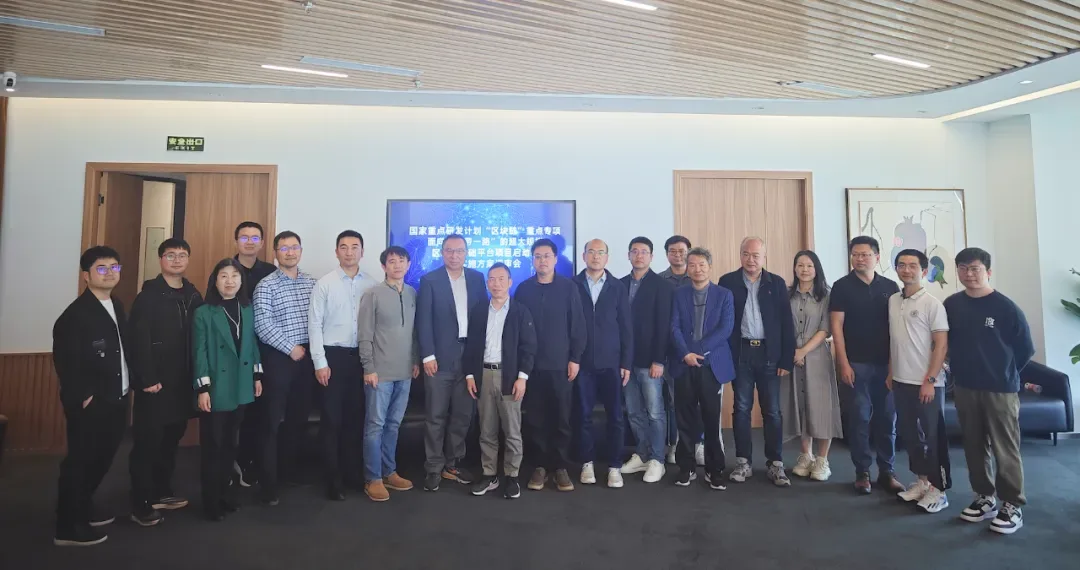
In March 2024, the Shanghai Tree-Graph Blockchain Research Institute hosted the launch of a national research and development project titled “Ultra-Large Scale Blockchain Infrastructure Platform for the Belt and Road Initiative.” Led by Conflux, with participation from the China Academy of Information and Communications Technology (CAICT), Shanghai Jiao Tong University, Fudan University, and Shanghai Maritime University, the project aims to build a public blockchain infrastructure capable of multi-country deployment and collaborative cross-border supervision for economic and trade cooperation along Belt and Road routes.
Figure 8: Launch of a national blockchain R&D project led by Conflux
Source: Shanghai Tree-Graph Blockchain Research Institute
Additional Chinese partnerships span McDonald’s China, Oreo, Little Red Book (China’s Instagram), the Hunan regional government, and integration with BSN (China’s state-backed Blockchain Service Network). Conflux’s investors also include Sequoia Capital China, Baidu Ventures, and Shunwei Capital. No other decentralized public blockchain has this depth of mainland China institutional relationships, and in a jurisdiction where regulatory relationships define market access, this is a formidable barrier to entry.
5.2. Technical Infrastructure Scaled for Payments
Conflux’s 3.0 upgrade, completed in September 2025, claims it boosted throughput from 6,000 to 15,000 TPS. This exceeds Solana’s real-world throughput of 3,000-5,000 TPS and dwarfs Ethereum’s 15-30 TPS. The hybrid PoW/PoS consensus mechanism (Tree-Graph architecture, which incorporates concurrent blocks and later orders them via the GHAST pivot-chain rule) processes blocks in parallel rather than sequentially, enabling this throughput while supporting 5,000+ nodes across 40+ countries.
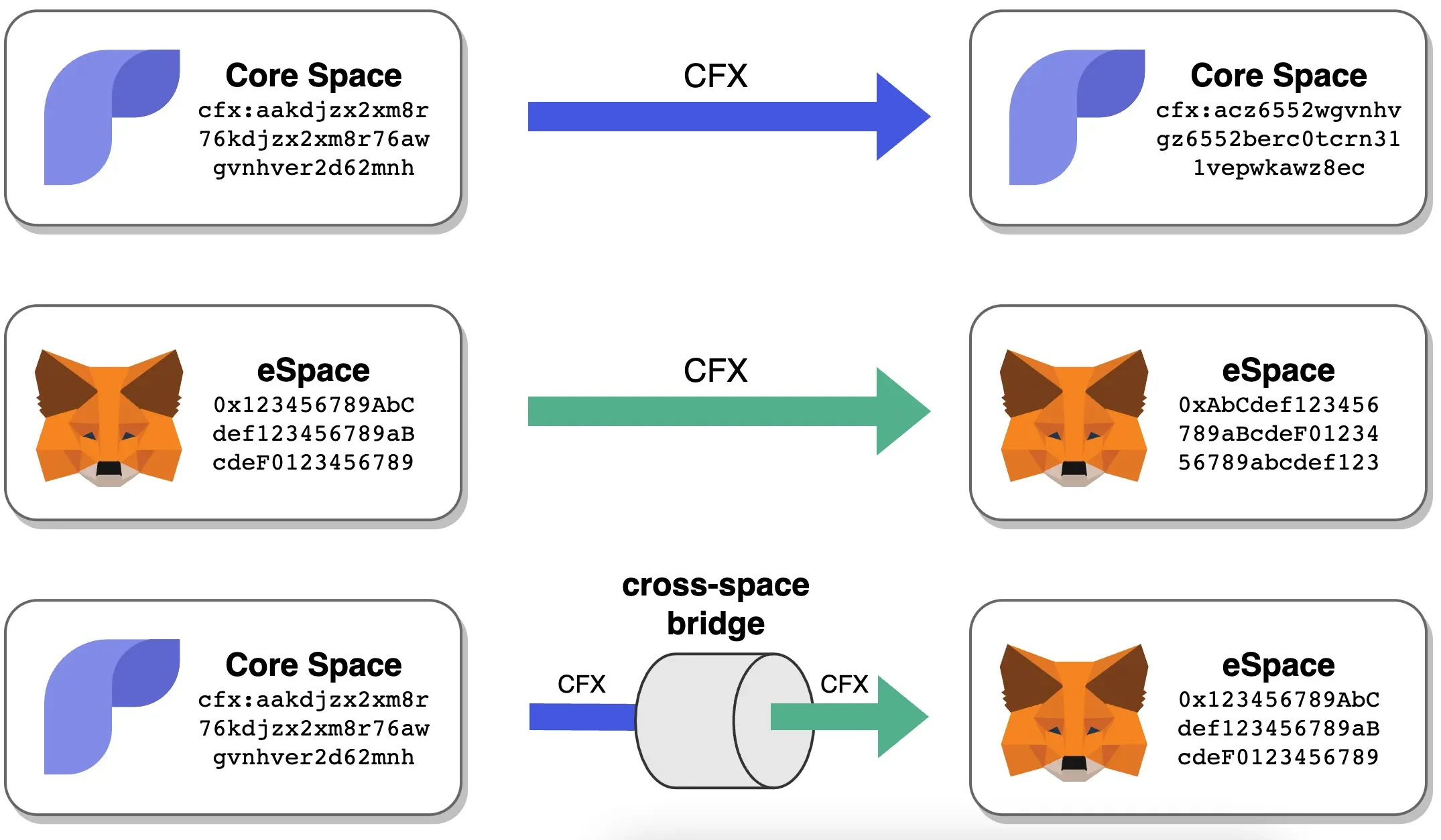
A unique dual-space architecture (Core Space for Conflux-native applications and eSpace for full EVM compatibility) allows developers to deploy standard Solidity smart contracts while benefiting from Conflux’s added features, including a sponsored gas mechanism that allows designated sponsors to cover gas fees on behalf of users. This is critical for payment applications since end users making a stablecoin purchase should not need to hold CFX tokens or understand blockchain mechanics. The sponsored gas model makes Conflux transactions feel like traditional payment processing.
Figure 9: Conflux Core Space versus eSpace transactions
Source: Péter Garamvölgyi
5.3. The Multi-Currency Stablecoin Matrix
Conflux’s stablecoin strategy is a noteworthy one. In November 2025, the network integrated USDT0 via LayerZero’s omnichain standard, connecting Conflux to the largest cross-chain stablecoin liquidity network in crypto. USDT0 has moved over $71 billion globally across 18 connected chains since its January 2025 launch, and Conflux’s integration means users can bridge USDT seamlessly from Ethereum, Tron, or any other supported chain without third-party bridges. Crucially, Conflux is not building a USD-only settlement layer. Its strategy centers on assembling a multi-fiat stablecoin matrix spanning USD, offshore RMB, and AUD, targeting the specific currency corridors that define Asian cross-border trade.
AUDX, an AUD-pegged stablecoin issued by an AUSTRAC-registered Australian entity with 1:1 full reserve backing, connects this multi-fiat strategy into the Australia-Asia trade corridor. AUDX has been listed on Kraken and Australian exchange SwyftX, providing Conflux with coverage of a major Asia-Pacific currency and opening use cases in Australia-linked trade finance, DeFi, and cross-border settlement. The inclusion of AUDX signals Conflux’s intent to serve as a broad-based fiat stablecoin hub rather than a single-currency chain.
AxCNH adds the offshore RMB pillar. What matters in the context of Conflux’s stablecoin architecture is not just AxCNH’s licensing or its enterprise MOUs, but its deployment trajectory. A pilot launched across Singapore and Malaysia in August 2025 marked the first live cross-border test of an on-chain CNH settlement instrument, and the partnership pipeline spans heavy machinery exports, electronics, and trade logistics. This maps directly to the corridors where RMB-denominated digital rails would displace costly intermediary banking. AxCNH effectively represents a bottom-up approach to RMB internationalization that complements China’s top-down e-CNY strategy, offering a market-driven alternative built on public blockchain infrastructure rather than central bank rails.
The combination gives Conflux a multi-currency settlement layer that few other chains offer with this geographic specificity: USD via USDT0, offshore RMB via AxCNH, and AUD via AUDX. For enterprises operating across China’s trade networks and the broader Asia-Pacific, this means they can denominate, settle, and manage cross-border flows in their currency of choice on a single chain. Conflux’s long-term vision is to continue expanding its selection of fiat-pegged stablecoins, positioning the network as a core circulation hub for stablecoins in Asia.
Figure 10: Conflux introduces Tether Gold to its ecosystem
Source: Conflux Network
This multi-asset ambition extends beyond fiat currencies. In April 2026, Conflux integrated XAUT0, the omnichain version of Tether Gold, via the same LayerZero infrastructure that powers USDT0. This gives the network exposure to one of the most globally liquid RWA categories while reinforcing its role as a broad settlement hub: spanning dollar liquidity via USDT0, offshore RMB payments via AxCNH, AUD-denominated trade flows via AUDX, and now commodity-backed value transfer via XAUT0.
5.4. Real-World Payment Connectivity
Conflux’s partnerships extend beyond on-chain infrastructure to real-world payment rails. The BitUnion prepaid card, developed with Smile Shop and operating on UnionPay International’s USD framework, is accepted in 183 countries and linkable to Alipay and WeChat Pay. This connects Conflux’s on-chain stablecoin ecosystem to the world’s two largest mobile payment networks (combined 2+ billion users) through a regulated card product with PCI-DSS and 3DS security certifications.
Additional payment partnerships include Infini (stablecoin payment infrastructure), VCard, oooo.money (cross-border payments), and Cwallet/UXLINK (everyday Web3 payments). AEON Pay enables CFX usage at 20 million+ merchants across Asia. The PayFi stack, announced in November 2024, integrates these components into a unified architecture: from stablecoins (USDT0, AxCNH, AUDX), to payment cards (BitUnion), wallets (BSIM, TokenPocket), DeFi (dForce, Unitus Finance), and finally merchant acceptance (AEON, UnionPay).
6. Execution: What Has Been Built
6.1. Green Energy Battery-Swapping RWA in China
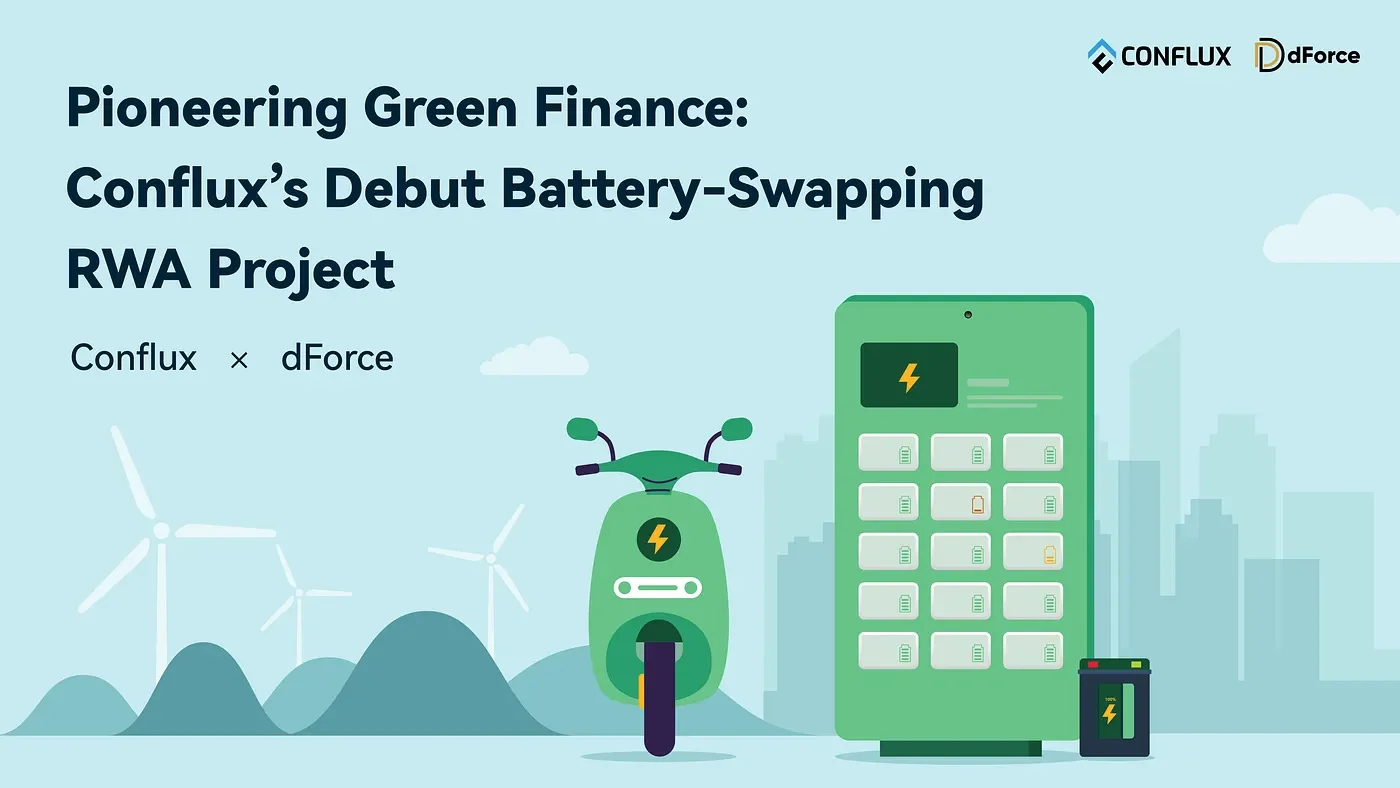
In March 2025, Conflux partnered with Xunying Group and Ant Digital Technologies to launch China’s first renewable energy battery-swapping RWA project in Hong Kong. The underlying assets comprise 596 battery-swapping stations and 15,000+ lithium batteries serving electric two-wheelers across six Chinese cities, generating predictable cash flows from high-frequency battery rental and service fees.
Figure 11: Conflux pioneers a battery-swapping RWA project
Source: Conflux Network
The structure is notable for its institutional ties. Off-chain, Conflux’s Hong Kong entity invests as a Limited Partner in the Xunying New Energy Battery-Swapping Infrastructure Fund. On-chain, RWA tokens called EaglePower ($EAG) are minted on Conflux eSpace, with each token pegged to 1 USDT representing the holder’s share in underlying infrastructure. $EAG tokens are deposited as collateral in dForce’s RWA lending protocol, providing a fixed ~8% annualized return with quarterly payouts governed by smart contracts. The financial product is issued and custodied by Victory Securities, a licensed Hong Kong institution.
Ant Digital Technologies, as part of Ant Group and an early participant in HKMA’s Ensemble sandbox, provides IoT capabilities for real-time equipment monitoring and feeds operational data on-chain for transparency. A second-generation project launched in April 2025 raised funds in just three days with interest rates compressed from 15% to below 8%, demonstrating genuine market demand for tokenized green infrastructure yields.
This project serves as a template for the CSRC filing pathway: a Chinese domestic asset (battery-swapping stations in six Chinese cities), tokenized through a Hong Kong-regulated structure (Victory Securities custody), settled on a China-compliant blockchain (Conflux), with institutional backing (Ant Digital Technologies). If the CSRC guidelines are implemented as written, this architecture could scale to encompass other assets such as real estate, EV charging, photovoltaic installations, and other Chinese infrastructure deployments.
6.2. PayFi Ecosystem Development
The 500-million CFX ecosystem fund announced in November 2024 funds the PayFi stack’s build-out. At current prices (~$0.060 per CFX), this represents approximately $30 million - modest compared to competing ecosystem funds but sufficient for targeted incentive programs in specific verticals. An additional $5-10 million in CFX was allocated as on-chain incentives for DeFi protocols to deploy on Conflux eSpace.
Figure 12: Conflux’s PayFi ecosystem stack
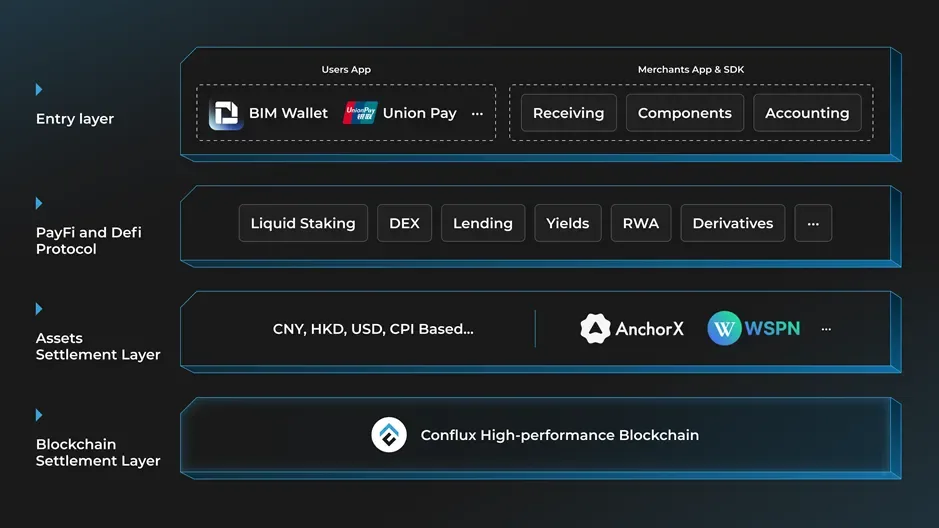
Source: Conflux Network
Funded projects include dForce ecosystem incentives (USDT0 and AxCNH liquidity pools), BitUnion prepaid card development, KinetFlow cross-chain infrastructure (launched November 2025), developer bounties, and protocol-specific campaigns. dForce launched AxCNH lending pools with APYs averaging ~15% in Q4 2025, incentivized by 120,000 CFX allocated to suppliers and 55,000 CFX to borrowers. Unitus Finance launched a USDT0 lending pool on Conflux eSpace with CFX promotional rewards enabled. Stablecoin issuance on Conflux eSpace also increased by over 100% following the USDT0 and AxCNH launches.
6.3. RWA Pipeline and DeFi Infrastructure
Beyond battery-swapping, multiple RWA projects are building on Conflux. PlayEstates and Minax have introduced $1 billion in real-world assets on-chain, Collaterize is expanding RWA in APAC, and Feiyang Digital Technology has issued 55,000 digital asset cards valued at RMB 100 each with Conflux technical support. While most of these projects are in early stages, they represent a diverse pipeline of asset classes preparing for the regulatory opening that the CSRC guidelines and Hong Kong infrastructure now enable.
On-chain, the DeFi ecosystem continues to grow. dForce serves as the primary DeFi protocol, Unitus Finance provides lending pools, WallFreeX operates a stablecoin DEX supporting AxCNH, and Swappi provides AMM liquidity. Integration with infrastructure providers like Hyperlane enables permissionless connectivity with 100+ blockchains, and Pyth price feeds increase the reliability of all assets on-chain.
Beyond the core PayFi stack, Conflux has built out institutional partnerships across the region: stc Bahrain became a Conflux validator in April 2025, Bitkub expanded Conflux’s Southeast Asian presence in October 2025, Pyth Network integrated 200+ real-time price oracle feeds, Ledger added full CFX hardware wallet support, and Binance Pool added a CFX mining pool. These infrastructure partnerships collectively strengthen the validator network, data infrastructure, and exchange connectivity required for institutional-grade settlement.
7. Final Words
The convergence of RWA tokenization and stablecoin payments in Asia represents one of the largest structural opportunities in crypto today. A $30 billion tokenized asset market growing toward multi-trillion-dollar projections, $320 billion in stablecoins processing $33 trillion annually, and an unprecedented regulatory opening across Hong Kong, Singapore, and mainland China collectively define a market that will reshape how Asian capital flows connect with global finance.
Conflux Network has positioned itself at a specific and defensible intersection of this opportunity: the China-compliant blockchain bridge connecting mainland Chinese assets, offshore RMB settlement, and Hong Kong’s emerging regulated tokenization infrastructure. Longer-term success depends on whether China’s controlled regulatory opening translates into actual deal flow, whether Hong Kong’s stablecoin licenses unlock institutional capital, and whether Conflux can convert its privileged regulatory relationships into measurable on-chain activity.
Overall, what makes Conflux worth watching is not what it has achieved, but the asymmetry of its bet. If even a fraction of China’s $3.3 trillion Belt and Road trade corridor migrates to stablecoin-based settlement, and a small percentage of Chinese domestic assets are tokenized through Hong Kong under the CSRC’s new guidelines, the volumes flowing through a China-compliant blockchain would dwarf anything the network has processed to date.
The infrastructure is being built and the regulatory doors are opening. The question is whether Conflux can walk through them before the window closes, or before larger players decide to build their own paths.