Summary
Since late 2025, Korea's crypto market has been rocked by a series of structural events: Bithumb's ₩60 trillion fat-finger incident exposed critical infrastructure gaps, while simultaneous M&A deals at Upbit, Korbit, and Coinone signal a once-in-a-generation ownership reshuffle across all five major exchanges.
The regulatory landscape is defined by the stalled Digital Asset Basic Act (Phase 2), whose three core debates (exchange ownership caps, the stablecoin "51% rule," and post-Bithumb internal controls) will shape the market for years to come. Meanwhile, STO legislation has cleared the National Assembly and two OTC exchange consortiums have received preliminary licenses.
A booming KOSPI (crossing 5,000 for the first time) has drained liquidity from domestic crypto exchanges, with stablecoin balances falling over 50% and an estimated ₩90 trillion migrating offshore, underscoring the rotation-driven nature of Korean retail capital. The nomination of BIS veteran Shin Hyun-song as Bank of Korea governor adds a new dimension to the CBDC and stablecoin debate.
Welcome to Part III of our "State of the Korean Crypto Market" series. For regulatory history and market foundations, please refer to Part I. For post-election policy outlook and retail dynamics, see Part II.
1. Introduction
The eight months since Part II have brought a rapid succession of structural shifts to Korea's crypto market. A fat-finger error at Bithumb briefly created ₩60 trillion worth of "phantom Bitcoin," triggering a flash crash and prompting emergency regulatory intervention. Within the same month, Mirae Asset moved to acquire Korbit, making it the first traditional Korean financial group to own a crypto exchange. Meanwhile, Dunamu (operator of Upbit) reaffirmed its merger with Naver Financial, and Korea Investment Securities began exploring an acquisition of Coinone. Taken together, the ownership structure of virtually every major Korean exchange is in flux simultaneously.
On the macro side, Korea's KOSPI index broke through 5,000 for the first time in January 2026, fueled by a semiconductor supercycle, corporate governance reforms, and aggressive government pro-equity policies. The result has been a visible rotation of retail capital away from crypto and into equities, with domestic exchange liquidity declining sharply. Meanwhile, the Digital Asset Basic Act (the Phase 2 legislation that would govern stablecoin issuance, exchange ownership limits, and market entry) remains stalled in the National Assembly, though STO legislation has quietly advanced to implementation. And the nomination of Shin Hyun-song, a prominent CBDC advocate from the BIS, as the next Bank of Korea governor has injected fresh uncertainty into the stablecoin debate.
This piece examines these developments across four themes: (1) the major events reshaping Korea's crypto landscape, (2) the status of Phase 2 legislation, (3) the emerging STO infrastructure, and (4) what lies ahead.
2. Major Events Since Part II
2.1. The Bithumb Fat-Finger Incident
On February 6, 2026, Bithumb (Korea's second-largest crypto exchange) suffered an unprecedented operational failure. During a promotional "random box" event intended to distribute ₩2,000 to ₩50,000 worth of Bitcoin to 695 participants, an employee entered the reward unit as "BTC" instead of "KRW." The result: each of the 695 recipients was credited with 2,000 BTC (approximately ₩190 billion per person) for a total of 620,000 BTC, worth roughly ₩60 trillion. The erroneous amount was equivalent to approximately 3% of Bitcoin's entire circulating supply and roughly 90 times Bithumb's own market capitalization.
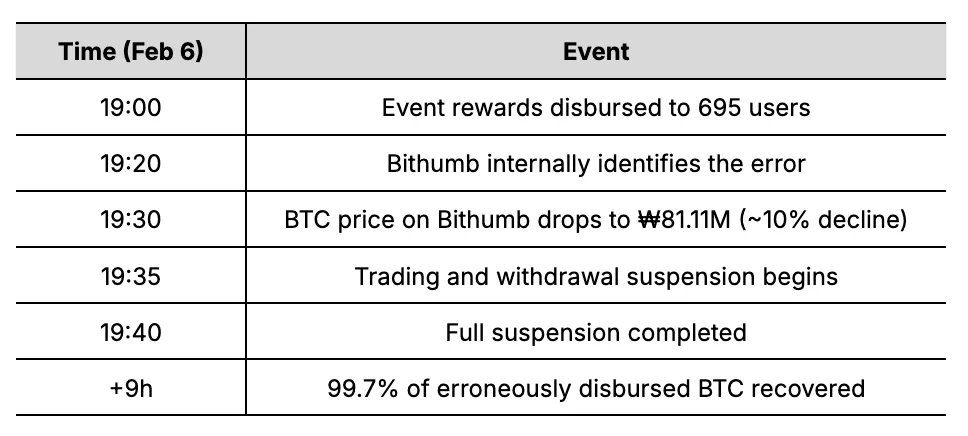
Some recipients immediately sold their windfall on the open market. Within minutes, Bithumb's BTC price plunged over 10%, briefly hitting ₩81.11 million before recovering to the ₩98 million range within five minutes. Investors with stop-loss orders were caught in the crossfire, triggering panic sells at artificially depressed prices. Bithumb halted all trading and withdrawals within 35 minutes of the error and ultimately recovered 618,212 BTC (99.7% of the total). The remaining 1,788 BTC, already sold by recipients, was covered using the company's own reserves. Bithumb subsequently offered 110% compensation to users who suffered losses from panic selling during the incident window and established a ₩100 billion Customer Protection Fund.
How exchanges actually work, and what went wrong. To understand why this incident was possible, it helps to understand how centralized exchanges operate. Industry-wide, exchanges hold the majority of customer assets in a small number of cold wallets. Individual trades between users are not settled on-chain each time; doing so would be prohibitively expensive in terms of network fees. Instead, exchanges adjust balances on their internal ledger (an off-chain database) and only move assets on-chain when a user requests a withdrawal from the exchange. This "off-chain ledger, on-chain custody" model is standard practice across Binance, Coinbase, and virtually every major centralized exchange globally.
The problem at Bithumb was not this architecture itself, but rather the absence of a fundamental safeguard: the system had no validation logic to prevent crediting users with more assets than the exchange actually held. The 620,000 BTC that appeared on users' accounts never existed on any blockchain. They were purely ledger entries with no backing. In this sense, the incident mirrors the 2018 Samsung Securities ghost-share scandal, in which an employee accidentally issued 2.8 billion shares (worth ₩112 trillion) that did not exist, and some employees sold them on the open market before the error was caught.
The subsequent regulatory investigation revealed broader systemic weaknesses. Of Korea's five major exchanges, three were found to reconcile their internal ledgers against blockchain wallet balances only once per day, despite operating 24/7 markets. Several exchanges also lacked multi-approval workflows for asset disbursements, meaning a single employee could authorize payouts without secondary verification
Regulatory response. The Financial Services Commission (FSC) convened an emergency task force within two days. The Financial Supervisory Service (FSS) dispatched on-site inspection teams to Bithumb and subsequently to all five major exchanges. On April 6, the FSC held an industry roundtable with DAXA (the Digital Asset Exchange Alliance) and announced a comprehensive set of reforms: all exchanges must now reconcile customer asset balances every five minutes, implement multi-approval systems for high-risk transactions, and segregate event-payout accounts from core operating accounts. DAXA is expected to finalize corresponding self-regulatory amendments by May 2026, with key provisions to be codified in the forthcoming Digital Asset Basic Act. The FSS has completed its on-site examination of Bithumb and is expected to initiate formal sanctions proceedings shortly.
Figure 1: Timeline of the Bithumb Fat-Finger Incident
Source: Presto research
2.2. The Great Ownership Reshuffle
Perhaps the most structurally significant development since Part II is that the ownership of nearly every major Korean exchange is changing at once. Two blockbuster M&A deals, and one emerging, are redrawing the landscape.
Mirae Asset × Korbit. In February 2026, Mirae Asset Consulting (a non-financial subsidiary of the Mirae Asset Group) announced the acquisition of a 92.06% stake in Korbit (Korea's oldest and fourth-largest exchange) for ₩133.5 billion. The sellers were NXC (Nexon's holding company, which held 60.5%) and SK Planet (31.5%). The deal represents the first time a major traditional Korean financial group has acquired a crypto exchange. Mirae Asset framed the acquisition as central to its "Mirae Asset 3.0" strategy, which envisions a convergence of traditional and digital asset services spanning STO, custody, and 24/7 global asset management.
Structurally, the deal was routed through a non-financial subsidiary to navigate Korea's longstanding "separation of finance and crypto" (금가분리) principle, an informal but strictly enforced administrative norm that has kept financial institutions from directly operating crypto businesses. In March, the Financial Intelligence Unit (FIU) approved the board composition change, clearing a key regulatory hurdle. The Fair Trade Commission (FTC) merger review remains pending.
Figure 2: Korbit Key Financial Indicators (2022–2024)
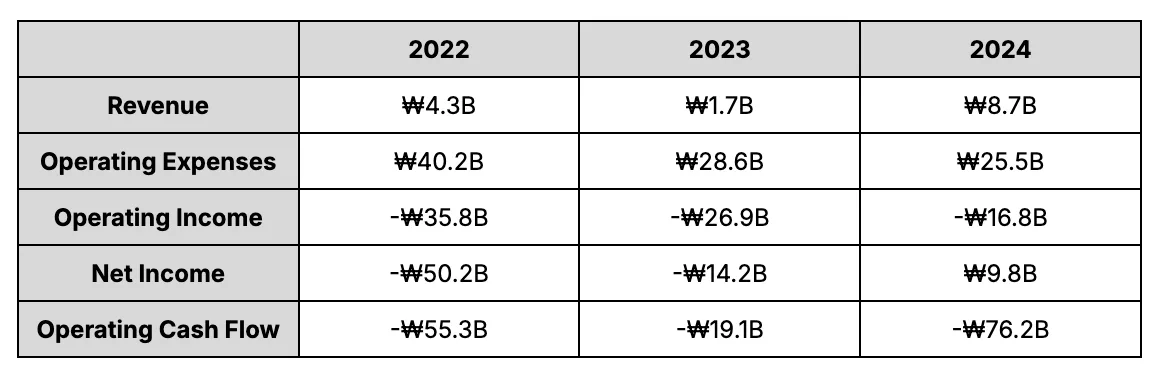
Source: Financial Supervisory Service Electronic Disclosure System (DART)
Dunamu × Naver Financial. In November 2025, Naver Financial (the fintech arm of Korea's dominant internet platform Naver) and Dunamu (operator of Upbit, Korea's largest exchange) announced a comprehensive share exchange. Under the deal, Dunamu would become a wholly-owned subsidiary of Naver Financial, which in turn sits under Naver Corporation. Dunamu's enterprise value was set at ₩15.13 trillion, with a share exchange ratio of 1 Dunamu share to 2.5423 Naver Financial shares.
At Dunamu's annual shareholders' meeting on March 31, 2026, CEO Kyungsuk Oh reaffirmed the deal would proceed as planned despite regulatory uncertainty, though the timeline was pushed back by three months to a September 30 closing date, reflecting delays in regulatory approvals and the evolving legislative landscape. The company also signaled openness to additional M&A with domestic financial institutions post-merger and confirmed plans to pursue an IPO promptly after closing. Notably, Bithumb, holding its own shareholders' meeting the same day, pushed its IPO target to 2028 or later, citing the need to focus on internal controls following the fat-finger incident.
Figure 3: Naver Financial and Dunamu Ownership Structures Pre-Exchange
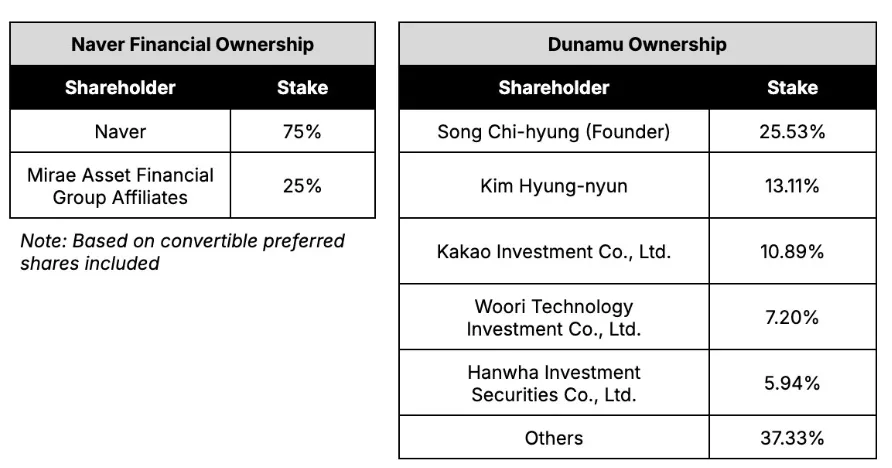
Source:Financial Supervisory Service Electronic Disclosure System (DART), Meritz Research
Korea Investment Securities × Coinone (emerging). In early April, reports emerged that Korea Investment Securities (one of the country's two largest brokerages) is exploring an acquisition of Coinone, Korea's third-largest exchange. Unlike Mirae Asset, Korea Investment Holdings does not have a non-financial subsidiary, making the deal's structure dependent on the potential relaxation of the "separation of finance and crypto" principle. Industry observers view this as a signal that the brokerage sector broadly sees crypto exchange ownership as a strategic imperative, particularly for STO infrastructure, younger demographic acquisition, and revenue diversification away from equity brokerage commissions.
2.3. Korea's Equity Rally and the Liquidity Drain
While institutional capital has been flowing into crypto exchange ownership, retail capital has been flowing out. Korea's benchmark KOSPI index crossed 5,000 for the first time on January 22, 2026, a milestone driven by a confluence of factors: a global semiconductor supercycle benefiting Samsung Electronics and SK hynix, the passage of commercial law amendments strengthening shareholder rights, the government's "Value-Up" program encouraging better corporate governance and dividend payouts, and strict real estate lending restrictions that redirected household capital toward equities.
Figure 4: KOSPI Has More Than Doubled in the Past Year
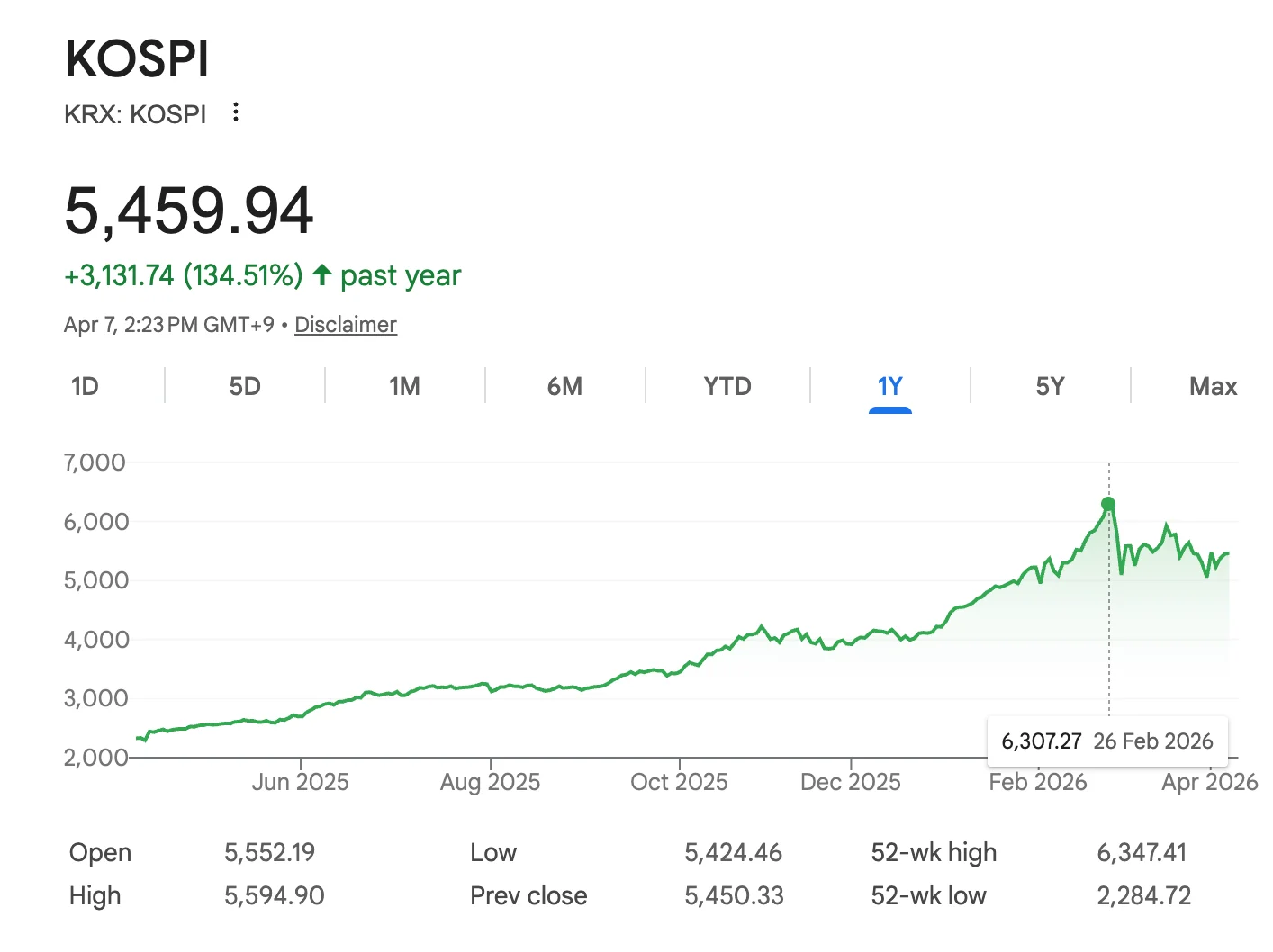
Source: Google
The impact on crypto liquidity has been stark. According to on-chain data from Allium Labs, stablecoin balances across Korea's five major exchanges fell from approximately $575 million in July 2025 to roughly $188 million by March 2026, a decline of over 50%. Daily average trading volume on domestic exchanges dropped more than 30% month-over-month during the same period.
The Kimchi Premium, long a barometer of Korean retail sentiment, has reflected this shift. As discussed in Part II, the premium turned negative in mid-2025 for the first time in recent memory. This trend has persisted into 2026, with Bitcoin frequently trading at a 1–2% discount on Korean exchanges relative to global benchmarks, a clear sign of weakened domestic buying pressure.
This pattern is consistent with a broader characteristic of Korean retail investors: cyclical asset rotation. Korean household capital has historically moved between real estate, equities, and crypto in response to policy signals and relative performance. The current rotation toward equities, amplified by government policy explicitly designed to channel capital away from real estate and into the stock market, has created a temporary liquidity vacuum in the domestic crypto market.
2.4. A New Central Bank Governor and the CBDC-Stablecoin Debate
On March 22, President Lee Jae-myung nominated Shin Hyun-song, head of the Monetary and Economic Department at the Bank for International Settlements (BIS), as the next governor of the Bank of Korea. The appointment carries particular significance for Korea's digital asset landscape, given Shin's extensive track record on CBDC and stablecoin policy during his 12 years at the BIS
Shin has been one of the most prominent intellectual critics of stablecoins in global central banking circles. His core argument centers on what he calls the "singleness of money" principle: for an economy to function smoothly, all forms of money must be interchangeable at par. In a 2023 BIS report co-authored with Rodney Garratt, he argued that stablecoins, as digital bearer instruments, inherently violate this principle because they are susceptible to deviating from their peg during periods of stress. He frequently cited the March 2023 Silicon Valley Bank episode, when USDC briefly traded at $0.88, as evidence that stablecoin parity is fragile precisely when it matters most. At the 2025 Econometric Society World Congress in Seoul, he went further, warning that KRW-denominated stablecoins could serve as "a shortcut to circumventing existing foreign exchange regulations" and become a conduit for capital flight.
In March 2026, weeks before his nomination, Shin published a new BIS working paper ("Tokenomics and Blockchain Fragmentation") that laid out a more structural critique. The paper argues that public blockchains require congestion fees to incentivize validators, and that higher decentralization mathematically demands higher fees. As fees rise, users migrate to cheaper, less secure chains, fragmenting the ecosystem. Stablecoins inherit this problem: USDC on Ethereum and USDC on Solana are recorded on separate, non-interoperable ledgers, and bridging between them introduces cost, latency, and security risk. The paper concludes only a trusted central authority, such as a central bank, can maintain the unified monetary network that modern economies require. Decentralization and monetary unity are, in Shin's framing, fundamentally incompatible.
Figure 5: Stablecoins Exist as Separate, Non-Interoperable Tokens Across Blockchains
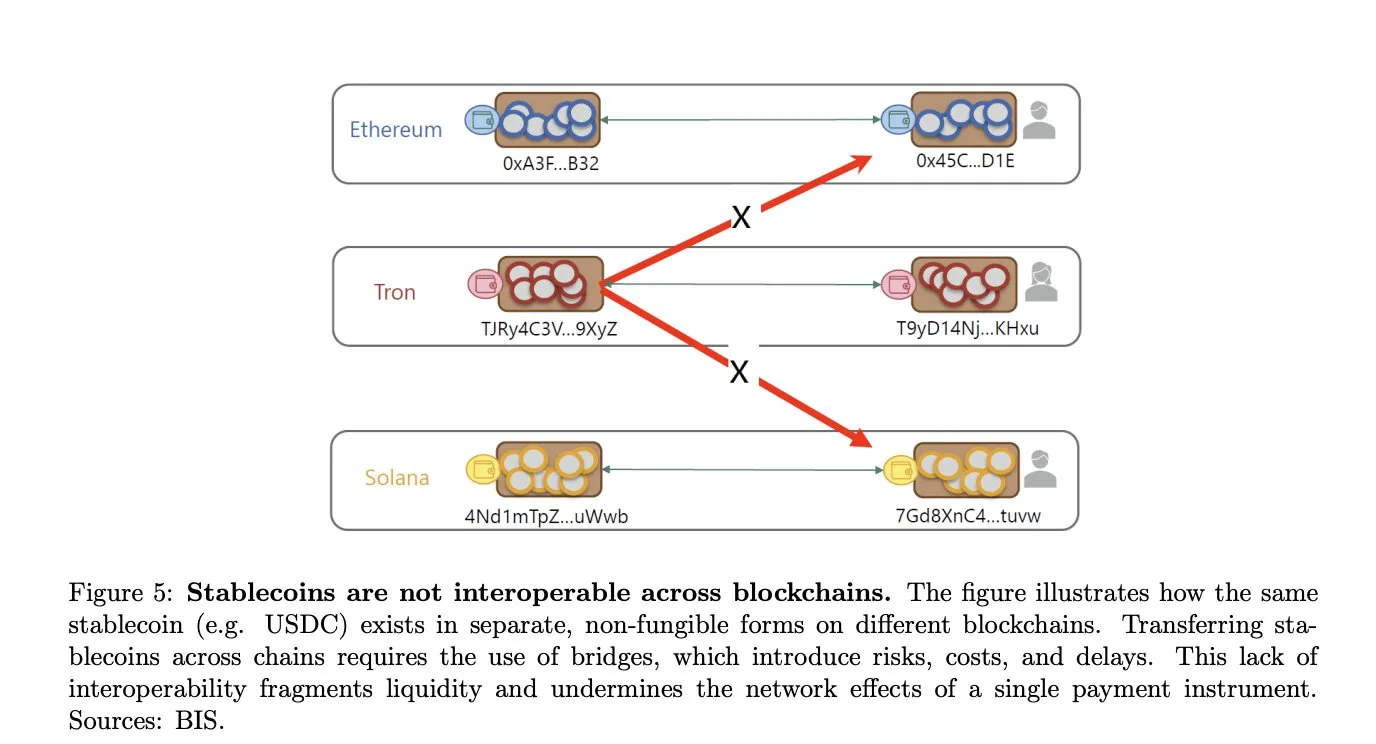
Source: BIS
This intellectual framework maps directly onto the Bank of Korea's ongoing "Project Hangang," a CBDC and deposit token pilot that launched its second phase on March 18, 2026. In Phase 2, the number of participating banks expanded from seven to nine (adding Kyongnam Bank and iM Bank), and the scope broadened to include government treasury disbursements via blockchain, with a pilot for EV charging infrastructure subsidies planned for H1 2026. The project's architecture, in which the central bank issues digital currency and commercial banks distribute deposit tokens, aligns closely with Shin's "unified ledger" vision.
Given this background, the crypto industry initially expected Shin's appointment to signal a harder line against private stablecoins and a strong push toward CBDC. However, his recent statements have been more nuanced than anticipated. In written responses to the National Assembly's Finance and Economy Committee on April 6, Shin stated that he is "fundamentally in favor of introducing a domestic KRW stablecoin," noting that stablecoins have positive uses as settlement instruments for tokenized assets. He added that CBDCs and stablecoins could "coexist in a complementary and competitive manner" within the future monetary ecosystem, though he emphasized that CBDC and deposit tokens issued on the back of central bank trust should remain "at the center" of that ecosystem. He also committed to continuing Project Hangang and to building digital currency infrastructure that supports private sector innovation from banks and fintech firms alike.
The practical implications are significant. If Shin maintains this dual-track posture as governor, Korea could pursue both a CBDC-anchored payment infrastructure and a regulated KRW stablecoin market simultaneously. This would position Korea as one of the few major economies attempting to institutionalize both models in parallel, and its experience could serve as a reference case for other non-dollar economies navigating the tension between monetary sovereignty and digital asset innovation.
2.5. Other Notable Events
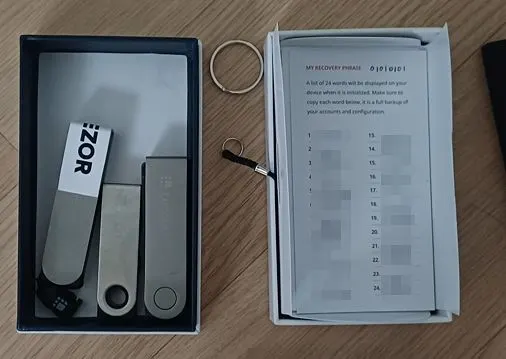
NTS Mnemonic Key Leak. On February 26, the National Tax Service (NTS) inadvertently exposed the mnemonic recovery phrase of a seized crypto wallet during a press briefing showcasing its success in collecting from high-value tax delinquents. The briefing materials, including a high-resolution photograph clearly showing the 24-word seed phrase written on a note beside a hardware wallet, were distributed to media outlets without redaction. Within hours, approximately 4 million PRTG tokens were transferred out of the compromised wallet by an unidentified party. Police cybercrime units launched an investigation, and a first suspect subsequently turned himself in.
While the actual financial damage was minimal (PRTG is a low-liquidity altcoin with negligible real-world trading volume), the incident became a national embarrassment and a symbol of the gap between Korea's ambitions for digital asset regulation and the practical crypto literacy of its public institutions. The Board of Audit and Inspection subsequently initiated a review of crypto asset management practices across all government agencies (including prosecutors, police, NTS, and customs) that hold seized digital assets. The NTS issued a formal public apology and announced the formation of a Digital Asset Management Improvement Task Force.
Figure 6: The NTS Published Hardware Wallet Recovery Phrases in Press Materials
Source: National Tax Service
3. Digital Asset Basic Act: Phase 2 Legislation Update
As covered in Part II, the Virtual Asset User Protection Act (Phase 1), enacted in July 2024, established the regulatory baseline for exchange operations, covering customer deposit protection, surveillance of suspicious transactions, and penalties for market manipulation. Phase 2, the Digital Asset Basic Act (디지털자산기본법), is intended to build the broader institutional framework: token issuance and disclosure requirements, service provider licensing, stablecoin regulation, and exchange governance standards.
Despite bipartisan acknowledgment of its importance, the legislation has stalled. Multiple bills have been introduced by lawmakers across party lines (notably by representatives Min Byung-duk, Lee Gang-il, and Kim Jae-seob), but as of April 2026, the bill has not been placed on the agenda of the National Assembly's Legislation and Judiciary Committee subcommittee. The delay reflects a combination of factors: disagreements between the ruling and opposition parties on key provisions, the approaching June 3 local elections, and the geopolitical overhang from the U.S.-Iran conflict dominating the legislative calendar.
Three issues sit at the center of the debate:
Exchange Majority-Shareholder Ownership Caps. The FSC has proposed limiting majority shareholder stakes in crypto exchanges to 15–20% for individuals (including related parties) and 34% for corporations, modeled on ownership restrictions for Korea's Alternative Trading Systems (ATS). The rationale is that the current oligopolistic structure (Upbit holds ~73% market share) concentrates systemic risk. All major exchanges, including Upbit, Bithumb, and Coinone, have collectively opposed the measure, arguing it would retroactively penalize founders and deter investment. The ruling Democratic Party broadly supports ownership limits as a transparency measure, while the opposition People Power Party has pushed back, arguing the Bithumb incident was an internal control failure unrelated to ownership structure.
The Stablecoin "51% Rule." Debate over KRW-pegged stablecoin issuance has centered on a proposal requiring that only consortiums in which banks hold at least a 51% stake be permitted to issue stablecoins. The Bank of Korea has taken a conservative stance, arguing that stablecoin issuance should begin exclusively with tightly regulated commercial banks and be phased in gradually, citing foreign exchange stability and financial contagion risks. This "bank-first" approach contrasts with some lawmakers' preference for allowing qualified non-bank entities, including fintech firms, to participate under FSC licensing. The FSC had targeted October 2025 for a dedicated stablecoin bill, but this timeline has slipped alongside the broader Phase 2 delays. The incoming BOK governor Shin's recent endorsement of CBDC-stablecoin "coexistence" may open space for compromise, though his insistence on central bank trust as the ecosystem's anchor suggests the regulatory bar for private issuers will remain high.
Post-Bithumb Internal Controls. The fat-finger incident injected a new dimension into the legislative debate. Regulators are now pushing for crypto exchanges to adopt financial institution-grade internal control standards, including real-time balance reconciliation, multi-approval workflows, periodic external audits of held assets, and mandatory contingency planning. While these measures enjoy broad support, industry participants worry that the compliance burden could accelerate consolidation by forcing smaller exchanges out of the market.
The FSC held its first Virtual Asset Committee meeting of 2026 on March 4, discussing a government draft that included all three provisions. However, the subsequent ruling party-government coordination session, expected to finalize the bill for introduction, has been repeatedly postponed. Market participants now expect the legislation to be deferred until after the June local elections at the earliest, with realistic enactment unlikely before H2 2026.
4. Security Token Offerings (STO): Korea's Emerging Infrastructure
4.1. Overview: Korea's STO Framework
While the Digital Asset Basic Act remains stuck in legislative limbo, a parallel track of capital markets reform has quietly reached a milestone. In January 2026, amendments to the Electronic Securities Act and the Capital Markets Act, collectively forming Korea's STO legal framework, passed the National Assembly. This marked the culmination of a three-year legislative process that began with the FSC's February 2023 "Token Securities Issuance and Distribution Regulatory Framework" announcement.
The key structural elements are as follows.
First, the amended Electronic Securities Act formally recognizes distributed ledger technology (DLT) as a valid method for registering and managing securities, placing blockchain-based tokens on equal legal footing with conventional electronic securities administered through the Korea Securities Depository (KSD). Issuers that meet prescribed requirements can directly register and manage token securities on distributed ledgers without routing through traditional securities firms.
Second, the amended Capital Markets Act creates a new category of licensed business: OTC intermediaries for investment contract securities and trust beneficiary securities. This establishes a legal basis for dedicated STO trading platforms (effectively "fractional investment exchanges") to operate within the regulatory perimeter rather than relying on temporary regulatory sandbox designations.
Third, and critically, Korea enforces a strict separation between "issuance" and "distribution." Token securities are issued under the Electronic Securities Act (with KSD overseeing total supply management), while trading occurs on separately licensed OTC platforms under the Capital Markets Act. This dual-track structure contrasts with jurisdictions where a single entity might both issue and trade tokenized assets.
The practical significance is that Korea's already-active fractional investment market, spanning real estate, music royalties, fine art, and other non-traditional assets, now has a pathway from sandbox experimentation to fully regulated operation. Meanwhile, STOs and crypto assets remain governed by separate legal regimes: the Capital Markets Act for the former, the (pending) Digital Asset Basic Act for the latter.
4.2. STO OTC Exchange Pre-Licensing
With the legal foundation in place, attention has turned to who will operate the new exchanges. In January through February 2026, the FSC conducted preliminary licensing reviews for STO OTC exchange applicants. Three consortiums competed:
KDX Consortium, led by Korea Exchange (KRX) and Koscom, with participation from BNK Financial Group (Busan Bank, Kyongnam Bank, BNK Investment & Securities), the Busan Digital Asset Exchange (Bdan), and over 40 other entities. The consortium was selected for preliminary licensing.
NXT Consortium, led by NXT (Nextrade, Korea's first licensed alternative stock exchange) alongside Shinhan Investment Corp, Musicow (a music royalty fractional investment platform), and Bluord. Also selected for preliminary licensing, with a target of opening the market in Q4 2026.
Lucentblock Consortium, a startup that had operated STO services under a regulatory sandbox designation. Lucentblock was rejected, scoring significantly lower on capital adequacy and business plan criteria (653 points vs. 750 for NXT and 725 for KDX). The company challenged the fairness of the process, arguing that evaluation criteria inherently favored large incumbents, and filed a complaint with the Fair Trade Commission alleging technology misappropriation by a competing consortium member. President Lee Jae-myung himself commented on the need for transparency and fairness in the licensing process during a cabinet meeting. As a compromise, regulators offered Lucentblock a sandbox extension for issuance activities only.
Figure 7: Three Consortiums Competed for STO OTC Exchange Licenses
Lead Entity | Participants | Strength | |
KDX (tentative name) | Korea Exchange (KRX) | Kiwoom Securities, Kyobo Life, KakaoPay Securities (joint), Heungkuk Securities | Stability |
NXT Consortium (tentative name) | Nextrade | Shinhan Investment Corp, Hana Securities, Hanyang Securities, Eugene Investment & Securities, Musicow, i&F Consulting | Private-sector-led innovation |
Lucentblock | Lucentblock | Korea Sauss Pool Venture Fund No.3, Hana Beyond Finance | Expertise |
Source: Financial Services Commission, IT Chosun
4.3. Implications
The STO infrastructure buildout intersects directly with the exchange M&A wave described in Section 2.2. Mirae Asset's acquisition of Korbit and Dunamu's merger with Naver Financial are both explicitly motivated in part by STO ambitions: the ability to combine securities firm infrastructure with crypto exchange technology to offer end-to-end tokenized asset services. Korea Investment Securities' interest in Coinone follows the same logic.
If the Q4 2026 timeline holds, the launch of regulated STO exchanges would mark a tangible step toward Korea's vision of bridging traditional finance and digital assets, providing a regulated venue for tokenized real estate, intellectual property, and other fractional investment products that currently trade in regulatory gray zones.
The broader structural picture is one of regulatory bifurcation: STOs advancing under the Capital Markets Act while crypto assets await the Digital Asset Basic Act. Whether these two tracks eventually converge, and how stablecoins (which sit at the intersection of both) are ultimately governed, will be a defining question for Korea's digital asset market in the years ahead.
5. Conclusion
Across three installments, this series has traced the Korean crypto market from its historical foundations (Part I), through political transition and policy formulation (Part II), to the current moment of operational crises, structural ownership changes, and institutionalization (Part III). Korea retains its position as one of the world's most active crypto trading markets by volume, but the infrastructure supporting that market has been exposed as insufficiently mature for its scale. At the same time, the simultaneous ownership reshuffle across virtually all five major exchanges, combined with the passage of STO legislation and the arrival of a CBDC-focused central bank governor, suggests the market is at an inflection point between its speculative retail origins and a future anchored in institutional finance.
The key variables from here are the passage of the Digital Asset Basic Act, the actual launch of STO exchanges in Q4 2026, the completion of the Naver-Dunamu and Mirae Asset-Korbit deals, the phased admission of institutional investors, the potential introduction of domestic spot crypto ETFs, and the scheduled implementation of crypto capital gains taxation in January 2027. How these resolve will shape not only Korea's domestic market but, given the country's outsized influence on global crypto trading flows, the broader industry as well.